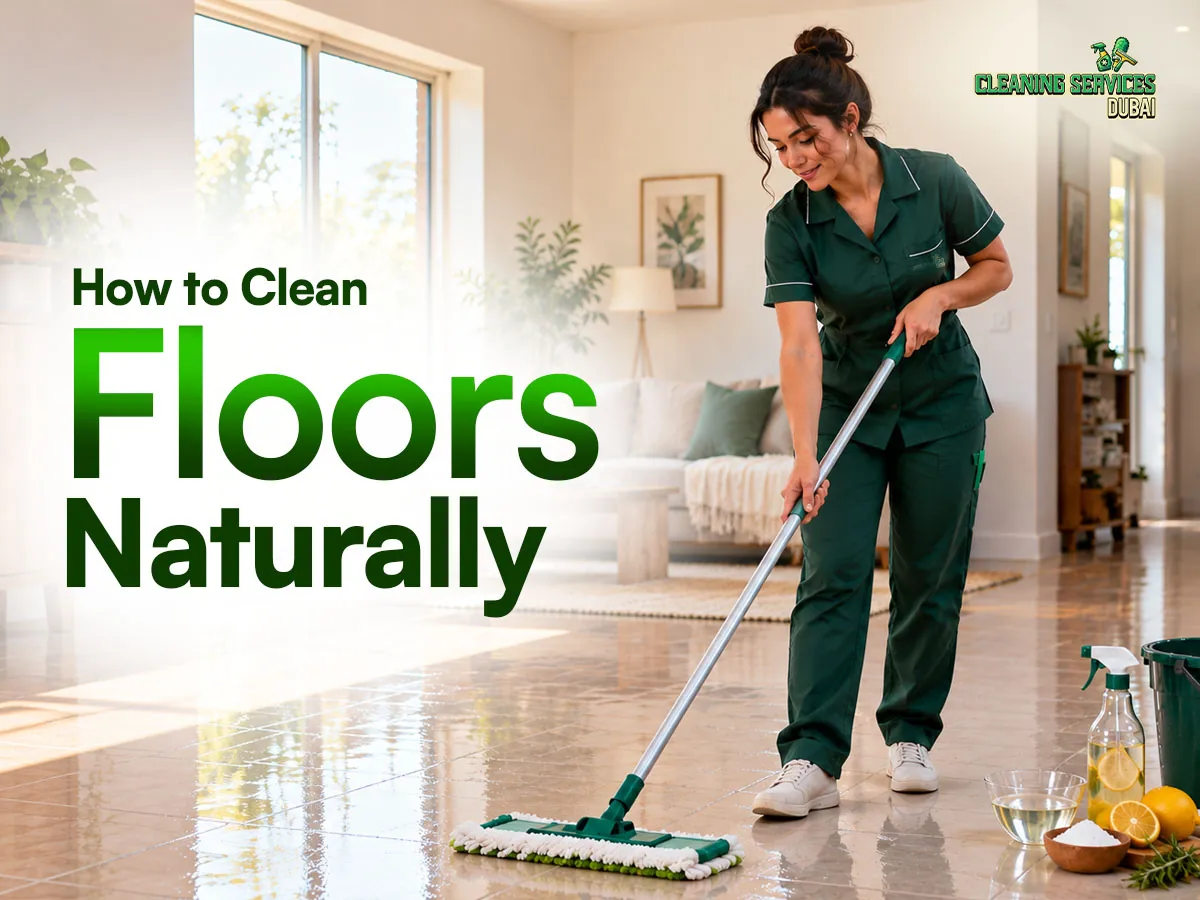
Floors add beauty and comfort to your home, but over time, dust, dirt and everyday spills can leave them looking dull and dirty. In Dubai, fine sand and AC dust make floor cleaning even more challenging. You mop the entire floor, only to find sticky patches, streaks or cloudy tiles once it dries. Sometimes, even after trying several cleaning products, the original shine just won’t come back.
However, learning how to clean floors naturally is easier than you might think and doesn’t have to be expensive. No need for complicated steps or strong cleaning chemicals. A few household ingredients and the right techniques can make a noticeable difference. In this guide, Cleaning Services Dubai will show you simple ways to clean marble, tile, hardwood, laminate and vinyl floors using common cleaning materials.
Need professional help? Try Cleaning Services Dubai!
Why Clean Floors Naturally?
Natural floor cleaning is a simple and affordable way to remove everyday dirt without relying on products with strong fragrances or harsh residues. Common household ingredients such as warm water, mild soap, baking soda and white vinegar can be useful for routine cleaning when applied to suitable surfaces.
Many Dubai families prefer eco friendly cleaning products to reduce unnecessary fragrances in their homes, especially when air conditioning runs throughout the day. Reusable microfiber pads and other eco friendly cleaning materials also help reduce waste and cleaning expenses.
However, not every natural ingredient is suitable for every floor. Vinegar, for example, works on some tiles but can damage marble. Knowing which cleaning solution to use makes a difference in protecting your flooring.
How to Clean Floors Naturally Step by Step
To clean floors naturally, sweep or vacuum loose sand and dust first, then damp mop with four litres of warm water and two or three drops of mild dish soap. Dry the surface with a microfiber cloth. Use diluted vinegar only on floors that allow acidic cleaners, and never on marble or natural stone.
Different materials require different care, and a method that works on ceramic tiles might damage hardwood or marble.
Here are six easy steps to get your floors clean without damaging their finish.
Step 1: Identify Your Floor Type
First, check what material your floor is made of. Marble, granite and travertine need pH-neutral cleaning products, while ceramic and porcelain tiles can generally tolerate mild soap and water.
Hardwood, parquet and laminate floors require extra care because excessive moisture can damage their finishes or joints. If you’re unsure about the floor coating, check the manufacturer’s instructions before applying any cleaner.
Step 2: Sweep or Vacuum Sand and Dust First
Dubai dust settles quickly around balconies, windows and entrances. Mopping over loose sand can drag grit across the floor and leave fine scratches, especially on polished marble and wooden surfaces.
Start by sweeping with a soft broom or vacuuming with a hard-floor attachment. Pay attention to corners, skirting boards and areas under furniture where dirt often collects.
Removing this loose debris first also stops your mop from spreading muddy water around the room.
Step 3: Prepare a Natural Cleaning Solution
For everyday floor cleaning, mix two or three drops of mild dish soap with four litres of warm water, provided the cleaner is suitable for your floor finish.
Cleaning floors with vinegar only makes sense on flooring approved for acidic cleaners. A diluted mixture can help with certain tile and vinyl surfaces, but marble and other acid-sensitive stones need a different approach.
Avoid adding too much soap or vinegar, as excess cleaner can leave residue or damage some finishes.
Step 4: Spot Test in a Hidden Corner
Before using any new homemade mixture, test it on a small area behind a door or underneath furniture.
Apply a little cleaner, let it dry and check for discolouration, cloudy patches or changes to the surface.
If the finish looks different, stop using the mixture. This quick test can save you from damaging a much larger area.
Step 5: Damp Mop in Small Sections
Dip a microfiber mop into the cleaning solution and wring it thoroughly. The mop should be damp rather than soaking wet.
Clean the floor in small sections using gentle strokes. A figure-eight motion works well on suitable tiled floors, while wooden planks should be cleaned along the grain.
For larger rooms, use two buckets, one containing the cleaning solution and another for rinsing the dirty mop. This prevents grime from being spread back across the floor.
Step 6: Rinse If Needed and Dry the Floor
Once you’ve finished mopping, check the surface for soap residue or excess moisture.
If the floor feels sticky, wipe it again with a clean mop lightly dampened with plain water. Finish by drying the surface with a microfiber cloth, especially around wooden joints and glossy tiles.
Drying prevents water spots, streaks and slippery patches. It also helps protect moisture-sensitive flooring.
Best Homemade Floor Cleaners Using Natural Ingredients
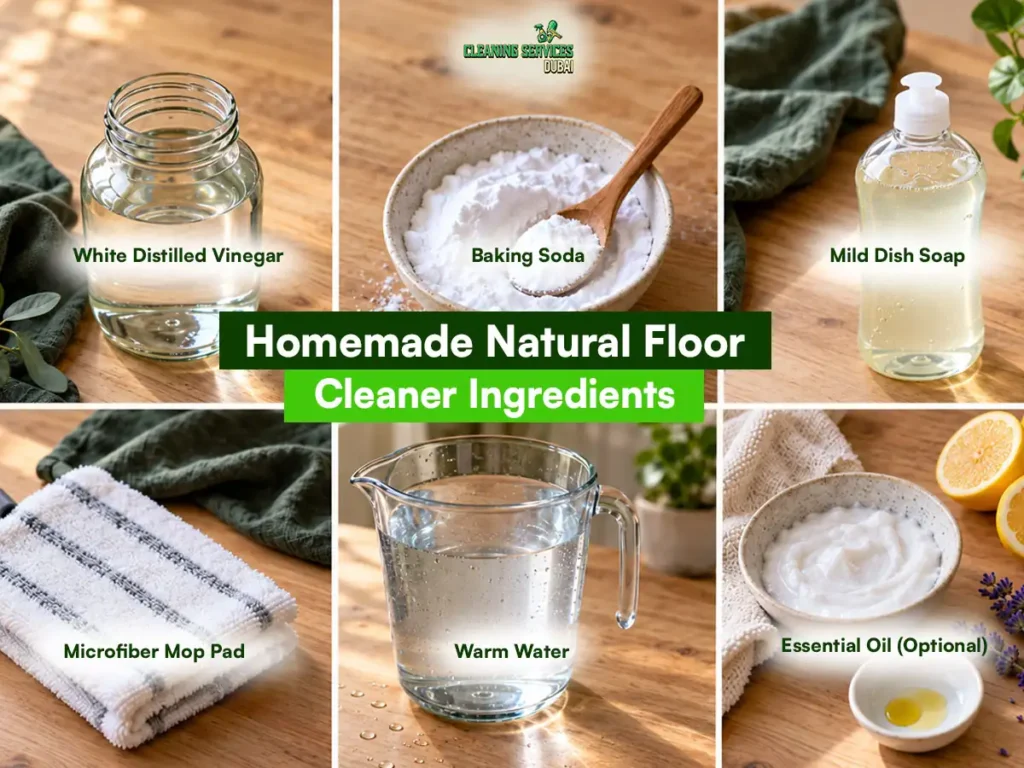
You don’t need a cupboard full of expensive cleaning products to maintain your floors. A good homemade floor cleaner can be made using a few common ingredients.
The important thing is choosing the right mixture for the surface you’re cleaning.
Here are five options worth knowing about.
Vinegar and Water Floor Cleaner
A diluted vinegar floor cleaner can remove light grime and mineral buildup from certain acid-resistant surfaces.
What you’ll need
- ½ cup white distilled vinegar
- 4 litres of warm water
Mix the ingredients in a bucket and use a well-wrung microfiber mop to clean the floor. Avoid leaving puddles and rinse if necessary.
This white vinegar floor cleaner may work on compatible ceramic tiles and vinyl flooring, but only where the manufacturer allows acidic products.
Never apply vinegar to marble, granite, travertine, limestone, waxed wood or vulnerable grout, as its acetic acid can affect the surface or protective finish.
Mild Dish Soap and Warm Water Solution
For everyday dust and footprints, mild dish soap and warm water are often all you need.
What you’ll need
- 2–3 drops of mild, fragrance-free dish soap
- 4 litres of warm water
Mix the ingredients, dip a microfiber mop into the solution and wring out excess water. Gently mop the floor and remove any remaining residue.
This method suits many compatible sealed floors, but always check the finish requirements. Marble and other natural stones are better cleaned using a stone-approved pH-neutral product.
Avoid adding extra soap, as too much detergent can leave floors sticky and cloudy.
Baking Soda Paste for Stubborn Floor Stains
Baking soda is a common household ingredient that can help loosen certain stubborn marks on compatible surfaces.
What you’ll need
- 3 tablespoons of baking soda
- Enough water to make a soft paste
Mix the ingredients, apply a small amount to the affected area and gently wipe with a soft cloth. Rinse away the residue and dry thoroughly.
A baking soda floor cleaner is best used for suitable spot-cleaning jobs rather than mopping entire rooms.
Avoid abrasive rubbing on polished marble, delicate wood finishes and glossy surfaces that scratch easily.
Vinegar-Free Cleaner for Marble and Sensitive Floors
Marble, travertine and limestone need special care because acidic ingredients can permanently damage their polished surfaces.
Instead of experimenting with vinegar or lemon juice, use a pH-neutral cleaner specifically approved for natural stone.
Follow the dilution instructions, clean gently with a microfiber mop and remove excess moisture immediately.
This is a safer approach when choosing a natural stone floor cleaner for delicate flooring. Avoid assuming that all plant-based soaps, including castile soap, are pH-neutral or suitable for every stone finish.
Fresh-Scented Floor Cleaner with Essential Oils
Want your home to smell fresh after cleaning? Start with clean mop pads, fresh water and a suitable low-fragrance cleaning product.
Essential oils such as lemon, lavender and tea tree are popular in homemade recipes, but they don’t need to be added for effective cleaning.
Some essential oils can also irritate pets or cause poisoning, particularly in cats. They may leave residue or slippery patches if mixed directly into mop water.
For homes with children or pets, a fragrance-free cleaner is usually the simpler choice.
Natural Cleaning Methods for Every Floor Type
Each flooring material has its own cleaning requirements. A solution that removes grease from ceramic tiles can leave dull marks on marble or damage the protective coating on hardwood.
Before starting, check this simple guide to see which method suits your floor.
| Floor Type | Suitable Cleaner | Avoid | Moisture |
|---|---|---|---|
| Marble | Stone-safe pH-neutral cleaner | Vinegar, lemon, Harpic | Lightly damp |
| Ceramic and porcelain | Mild soap and water | Abrasive brushes | Damp |
| Hardwood | Wood-approved cleaner | Excess water, unapproved vinegar | Barely damp |
| Laminate | Laminate-approved cleaner | Soaking, unapproved steam | Barely damp |
| Vinyl and PVC | Mild floor-safe detergent | Harsh solvents | Lightly damp |
| Granite and travertine | Stone-safe pH-neutral cleaner | Acidic ingredients | Lightly damp |
| Slate and terrazzo | Finish-compatible neutral cleaner | Unapproved acids and abrasives | Lightly damp |
| Sealed concrete | Suitable mild detergent | Sealer-damaging chemicals | As permitted |
Marble Floors
Marble gives Dubai apartments and villas an elegant appearance, but it can lose its shine when cleaned with unsuitable products.
The best way to clean marble floors is to remove loose sand first, then mop gently using a stone-safe pH-neutral cleaner. Finish by drying the surface with a soft microfiber cloth to prevent water spots.
Avoid vinegar, lemon juice, Harpic and other acidic cleaners. Marble contains calcium carbonate, which reacts with acids and develops dull etched marks.
Also, clean coffee, juice and other spills immediately to reduce staining. If the surface remains dull after washing, it may need professional honing or polishing rather than stronger cleaning chemicals.
Ceramic and Porcelain Tile Floors
Ceramic and porcelain tiles are popular because they’re durable and relatively easy to maintain.
To clean floor tiles naturally, begin by sweeping away loose dirt. Mop with warm water and a few drops of mild soap, then rinse if needed.
Some acid-resistant tiles can tolerate diluted vinegar, but cement-based grout and certain surface treatments may not. Avoid leaving acidic solutions around the tile joints.
For glossy surfaces, use less detergent and finish with a clean microfiber cloth.
Porcelain tile floors need the same routine, as long as you follow the manufacturer’s recommendations.
Hardwood and Engineered Wood Floors
Wooden flooring adds warmth to a room, but too much moisture can cause swelling, warping or damage to the finish.
To clean hardwood floors naturally, start by removing dust with a soft broom or vacuum attachment designed for wooden floors.
Next, apply a manufacturer-approved wood-floor cleaner with a barely damp microfiber mop. Clean along the wood grain and dry immediately.
Other wood floors follow the same routine, although waxed, oil-treated and unfinished wood may need special products.
Avoid soaking wooden planks or applying olive oil to restore shine. Oil can leave slippery buildup, and repeated vinegar cleaning may damage some protective finishes.
Laminate Floors
Laminate flooring can look similar to natural wood, but its joints are sensitive to moisture.
Start by vacuuming loose dust and sand. Apply a laminate-approved cleaner using a lightly damp microfiber mop or spray mop.
Work in small sections and wipe the floor dry as you go.
Never pour water directly onto laminate flooring. Avoid steam cleaners unless the manufacturer specifically approves them.
If your laminate looks cloudy after mopping, old cleaning residue may be the problem. A clean, lightly damp microfiber cloth can often remove it.
Vinyl, PVC and Linoleum Floors
Vinyl flooring is generally easy to clean, making it a practical choice for busy households.
Vinyl cleaning starts with regular sweeping or vacuuming. Follow with warm water and a mild floor-safe cleaning product. Our guide on how to clean vinyl flooring covers it in detail.
Some vinyl floors tolerate diluted vinegar, but always check the manufacturer’s instructions before using it.
For PVC flooring, avoid harsh solvents and stiff brushes that can damage the surface.
Linoleum has a different composition, so use cleaning products approved for its finish. After mopping, dry the seams and edges to prevent moisture buildup.
Granite, Travertine, Slate and Terrazzo Floors
Natural stone floors are durable, but their appearance depends on proper maintenance.
Use a pH-neutral stone cleaner and a soft microfiber mop. Avoid acidic mixtures and abrasive cleaning powders.
On travertine tiles, pay attention to filled pores and grout lines where dirt can collect.
Slate floors often have textured surfaces, so vacuum carefully before mopping. Terrazzo can contain marble chips or other aggregates held in cement or resin, making finish-compatible cleaning important.
Granite also needs appropriate care, particularly when it has protective sealers.
For damaged stone, repeated scrubbing may make the problem worse. Specialist cleaning or polishing may be needed.
Concrete and Outdoor Interlock Floors
Concrete balconies, parking areas and outdoor interlock paving collect sand, mud and oily marks over time.
Start by sweeping away loose debris. Apply warm water and a suitable mild detergent, then scrub using a brush that matches the surface.
A firmer brush may be appropriate for durable uncoated paving, while sealed concrete needs gentler tools.
For oil stains, choose a concrete-safe degreaser instead of relying on homemade mixtures that may not remove deeply absorbed grease.
Rinse carefully and avoid allowing dirty water to collect near entrances or drainage points.
Tools You Need for Natural Floor Cleaning
You don’t need expensive equipment to keep floors looking clean. A few reliable tools can make your everyday routine easier.
Here are the essentials:
- Microfiber flat mop: The most useful floor cleaning mop for gentle damp mopping and drying floors.
- Vacuum cleaner: Removes sand, hair and loose dirt before washing.
- Soft floor cleaning brush: Useful for textured tiles and compatible grout.
- Spin mop or two-bucket system: Helps separate clean solution from dirty water.
- Spray bottle: Allows controlled application on suitable floors.
- Microfiber cloths: Useful for wiping spills and buffing polished surfaces.
- Doormats: Reduce the amount of sand entering your home.
- Felt furniture pads: Protect flooring from scratches when furniture moves.
For larger properties or heavily soiled floors, a floor cleaning machine can make the job easier when the equipment is suitable for the material.
Remove Stains, Grout Dirt and Streaks Naturally
Cleaning floors regularly doesn’t always remove stubborn marks. Cooking grease, mineral deposits, old detergent and dirty grout can leave surfaces looking stained even after mopping.
Here are some simple methods for common floor-cleaning problems.
Remove Grease and Sticky Residue from Kitchen Floors
Kitchen tiles collect cooking oil, food spills and sticky footprints throughout the day.
Start by wiping away fresh grease with a clean cloth. Apply warm water mixed with a small amount of mild dish soap, then gently wipe the affected area.
For stubborn grease, repeat the cleaning process rather than adding excessive detergent.
Finish with a clean damp cloth to lift any leftover soap, then let the floor dry completely. Avoid oil-based polishing recipes in kitchens because they can make floors slippery.
Clean Dirty Tile Grout Without Scrubbing
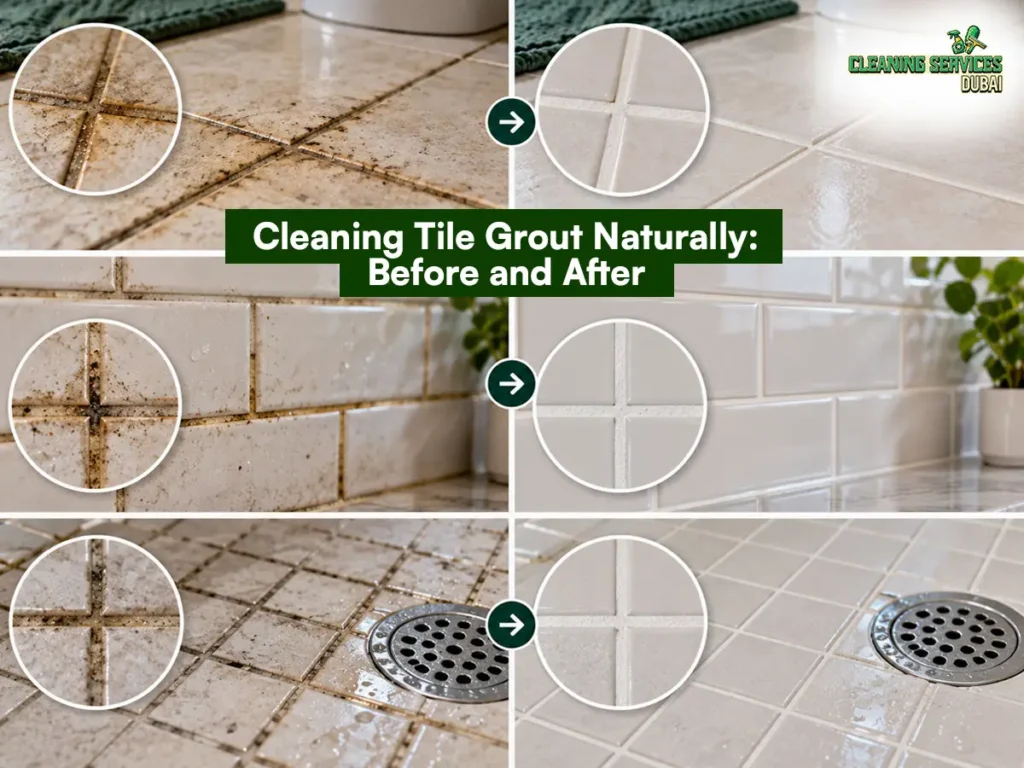
Grout lines can collect dirt and lose their original colour over time.
To clean floor grout, start with warm water and a grout-safe neutral cleaner. Apply it to the joints and allow the recommended contact time.
Use a soft grout brush to loosen stubborn dirt, then rinse and dry.
A baking soda paste may help with certain grout stains, but test it first, especially on coloured grout or delicate tiles.
Avoid leaving vinegar on cement-based grout because repeated acid exposure can gradually weaken it.
Remove Soap Scum and Hard Water Marks from Bathroom Floors
Bathroom tiles can develop cloudy mineral deposits and soap residue, particularly around showers and wet areas.
Apply a mild cleaner suitable for the tile surface, then wipe gently with a microfiber cloth.
For acid-resistant ceramic or porcelain tiles, a manufacturer-approved descaling product may help remove mineral deposits.
Never use acidic cleaners on marble, travertine or limestone.
Drying the bathroom floor after washing helps prevent fresh water spots.
Get Rid of Streaks and Cloudy Buildup
Do your tiles still look streaky after mopping? Too much detergent or dirty mop water may be causing the problem.
For shiny floor tiles without streaks, wipe them again with a clean microfiber mop lightly dampened with plain water.
Work in small sections and dry the surface immediately.
If the haze remains, check for old cleaning-product buildup or damage to the floor coating before using another chemical solution.
Make Your Floors Shine Naturally Without Streaks
A floor can lose its appearance when dust, detergent residue and water spots collect over the surface.
Before using a floor polish, try cleaning the surface properly. You may find that removing the buildup is enough to reveal its existing shine.
Shine Marble and Tile Floors
Remove loose sand and dust with a vacuum first. Mop with a cleaner approved for the surface, rinse if necessary and dry with a clean microfiber cloth.
Avoid applying oil or vinegar to marble. If you notice scratches, etched patches or worn polish, professional honing or polishing may be required.
Shine Wood, Laminate and Vinyl Floors
Use an approved cleaner to remove dirt and residue, then dry the surface using a soft cloth.
Avoid olive oil, wax and vinegar-based polishing mixtures unless the flooring manufacturer recommends them.
If the protective topcoat has worn away, washing won’t restore the original finish. The floor may need refinishing or another suitable professional treatment.
Can You Disinfect Floors Naturally?
Keeping a floor clean and disinfecting it are two different jobs.
Warm water and soap remove everyday dirt and reduce germs through physical cleaning, making them suitable for routine maintenance.
However, vinegar, baking soda and essential oils should not be treated as reliable disinfectants.
If your floor needs disinfection after illness or contamination, clean it first and then use a registered disinfectant approved for that material. Follow the product’s contact-time and safety instructions.
Steam cleaning may also be appropriate for certain hard surfaces, but not every floor can tolerate high temperatures and moisture.
Avoid steaming wood or laminate unless the manufacturer explicitly approves it.
Natural Floor Cleaning Tips for Dubai Homes
Dubai floors face cleaning problems that can be easy to overlook. Fine sand enters through balconies, AC dust settles in corners and bathroom moisture can leave water marks.
Taking a few simple precautions can keep your floors cleaner between regular mopping sessions.
Deal with Sand and AC Dust Before Mopping
Place doormats at entrances and remove outdoor shoes whenever practical.
Dry mop or vacuum busy areas regularly, especially near balconies and windows.
Clean accessible AC vent surfaces when needed to reduce settled dust.
Most importantly, never mop directly over sand on marble or wooden flooring. The particles can scratch the surface as the mop moves.
Prevent Hard Water Marks on Bathroom Tiles
Bathroom floors often collect water spots and mineral deposits around showers.
After cleaning, wipe away standing water and allow the floor to dry.
Use a suitable cleaner for ceramic and porcelain tiles, while marble and other natural stone should be maintained with stone-safe products.
Regular drying also helps reduce dampness around grout lines and corners.
Protect Wood and Laminate from Humidity
Keep wet mats, damp towels and balcony water away from wood and laminate flooring.
Clean spills immediately and avoid leaving water around plank joints.
Maintain comfortable indoor humidity through appropriate ventilation or air conditioning.
These small habits can help protect flooring in Dubai apartments and villas, especially during humid weather.
Common Mistakes to Avoid
Even simple household ingredients can damage floors when used incorrectly.
Here are some mistakes worth avoiding:
- Using vinegar, lemon or Harpic on marble: Acidic ingredients cause permanent etching.
- Soaking hardwood or laminate: Excess moisture can damage boards and joints.
- Mopping over sand: Loose grit scratches smooth surfaces.
- Adding too much dish soap: Detergent residue leaves sticky and cloudy patches.
- Mixing vinegar and baking soda for extra cleaning power: Their reaction largely neutralises both ingredients.
- Using abrasive pads or steel wool: Harsh scrubbing can damage protective finishes.
- Applying oil-based mixtures for shine: Excess oil can create slippery floors.
- Using one dirty mop throughout the house: It can spread dirt between rooms.
- Assuming natural cleaning means disinfection: Ordinary cleaning doesn’t guarantee disinfection.
Always check the floor’s care instructions before trying a new cleaning mixture.
Floor Cleaning Schedule for Dubai Homes
How often you should clean your floors depends on the flooring material, foot traffic and amount of dust entering your home.
Here’s a simple cleaning schedule to follow:
| Frequency | What to Do |
|---|---|
| Daily | Sweep or vacuum busy entrances and wipe spills immediately |
| 2–3 times a week | Dust mop busy hallways, kitchens and living areas |
| Weekly | Damp mop compatible bedroom and bathroom floors |
| Monthly | Inspect grout, skirting boards, corners and cleaning residue |
| Periodically | Arrange professional deep cleaning or polishing when required |
Homes with pets, children or frequent visitors may need more regular cleaning.
Keeping dust under control and removing spills promptly can make weekly maintenance much easier.
Our Floor Cleaners in Dubai
Tired of mopping the same floor without getting the results you want? Some problems need more than a homemade solution, especially when you’re dealing with dull marble, stubborn grout stains, kitchen grease or post-renovation dust.
That’s where Cleaning Services Dubai comes in.
Our professional floor cleaning in Dubai is designed for homes and businesses that need thorough cleaning without putting delicate flooring at unnecessary risk. We focus on identifying the floor material, choosing suitable cleaning equipment and paying attention to neglected corners, edges and grout lines.
For larger cleaning jobs, explore our deep cleaning services in Dubai. If kitchen grease is the main problem, our kitchen deep cleaning in Dubai service may be a better fit.
Don’t keep spending money on cleaning products that aren’t solving the problem. Send Cleaning Services Dubai photos of your floors on WhatsApp, tell us what needs cleaning and request a quotation before booking.
WhatsApp: +971 56 929 2021
FAQs – Quick Floor Cleaning
What Is the Best Homemade Floor Cleaner?
For many compatible sealed floors, two or three drops of mild dish soap mixed with four litres of warm water make a practical everyday cleaner. Apply it using a damp microfiber mop and dry thoroughly. Natural stone requires a suitable pH-neutral product.
Can You Clean All Floors with Vinegar and Water?
No. Diluted vinegar may work on certain ceramic and vinyl floors, but it can damage marble, travertine, limestone and some protective coatings. Always check the manufacturer’s instructions before applying an acidic cleaner.
Is Vinegar Safe for Hardwood Floors?
Many hardwood manufacturers advise against vinegar because repeated exposure can affect protective finishes. Use a wood-approved cleaner with a barely damp microfiber mop and dry the planks immediately after washing.
What Is the Best Way to Clean Hardwood Floors?
The best way to clean hardwood floors is little and often. Dry-dust or vacuum every day so sand can’t scratch the finish, and damp mop once a week with a wood-approved cleaner on a well-wrung microfiber pad. Avoid steam mops unless the manufacturer approves them, and wipe spills straight away.
Is Harpic or Any Acid Cleaner Safe for Marble Floors?
No. Harpic and other acidic toilet cleaners can damage marble and leave permanent dull patches. Use a marble-safe pH-neutral cleaner instead. Already-etched surfaces may require professional polishing or honing.
How Do I Clean Marble Floor Stains?
To clean marble floor stains, blot fresh spills and wash the spot with a stone-safe pH-neutral cleaner. For older oil-based stains, a paste of baking soda and water, covered and left overnight, then lifted off gently, can draw the stain out. Dull, rough patches are usually etching, not stains, and need professional polishing.
Why Are My Floors Still Dirty After Mopping?
Common reasons include leftover sand, dirty mop water, too much detergent or old cleaning residue. Vacuum first, use a clean microfiber mop and rinse when necessary. Marks that remain after proper cleaning may indicate finish damage.
How Do I Clean Kitchen Tiles Naturally?
To clean kitchen tiles naturally, wipe cooking splashes the same day, before the grease hardens. Once a week, wash floor and wall tiles with warm water and a few drops of dish soap, using a little baking soda paste on baked-on spots near the cooker. Rinse with clean water and dry so the floor isn’t slippery.
How Do I Clean Bathroom Floor Tiles?
To clean bathroom floor tiles, use a floor wiper to push water towards the drain after every shower. Once a week, mop with a mild tile-safe cleaner and gently brush the grout lines. Leave the door open or run the extractor fan afterwards so the grout dries faster and stays mould-free.
Does Vinegar Disinfect Floors?
Not reliably. Household vinegar has some antimicrobial properties, but it isn’t a substitute for a registered disinfectant. For situations requiring disinfection, clean the floor first and use a suitable approved product according to its label instructions.
How Do I Clean Floors Naturally Without Vinegar?
Plain warm water and a well-wrung microfiber mop handle most everyday dust without any cleaner at all. For sticky marks on tile or vinyl, apply a little baking soda paste and rinse. On marble, wood and other vinegar-sensitive floors, this water-first method is the safest place to start.
Are Natural Floor Cleaners Safe for Pets and Kids?
Not always. Some essential oils, acidic mixtures and concentrated cleaning products may cause irritation or other risks. Choose suitable low-fragrance products, keep children and pets away while cleaning and let the floor dry completely.
Wrap Up!
Keeping your floors clean and fresh doesn’t have to be difficult or expensive. Once you understand what each surface needs, a few simple cleaning methods can make everyday maintenance much easier.
Remember to remove sand and dust before mopping, choose the right cleaner for your flooring and dry the surface properly. These small steps can help protect the finish and prevent stubborn buildup.
And when dull marble, dirty grout or heavy grease becomes too much to handle, Cleaning Services Dubai is here to help. WhatsApp us for a floor cleaning quotation and enjoy a cleaner home without the extra work.
