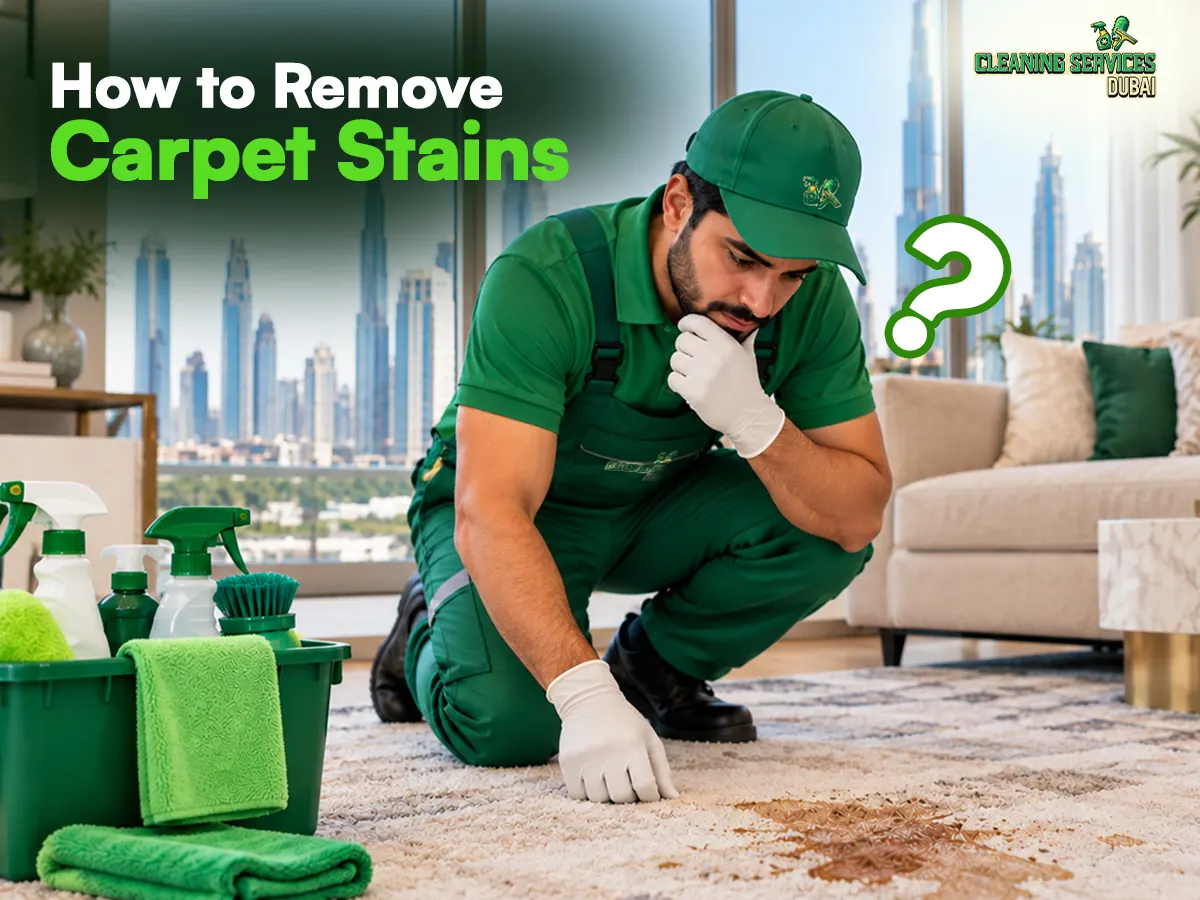
Spilled karak chai on the living room carpet? Found an old food mark after moving the sofa? Carpet stains are frustrating, and rubbing them usually makes things worse. The good news: most fresh spills come out at home with a white cloth, mild dish soap and a little patience.
This guide shows how to remove carpet stains step by step, from coffee, makeup and pet accidents to turmeric, grease and old, set-in marks. You’ll get exact cleaning ratios, home remedies that actually work, what to avoid on wool, silk and Persian rugs, and when to call a professional carpet cleaner in Dubai.
Quick answer: how to remove stains from carpet
- Lift any solids with a spoon or blunt knife.
- Blot the spill with a clean white cloth, working from the outside in. Never rub.
- Spot test your cleaner on a hidden area first.
- Dab on a mix of ¼ teaspoon clear dish soap and 1 cup lukewarm water (cold water for blood).
- Rinse by blotting with a cloth dampened in plain water, then press dry with a towel.
- Dry the area fully with a fan or the AC. If the stain returns, or the carpet is wool, silk or a Persian rug, call a professional.
How to Remove Stains from Carpet (Step-by-Step)
You don’t need an expensive machine to get stains out of carpet. Act quickly, use the right solution and keep the mess on the surface instead of pushing it deeper.
Step 1: Act Fast and Lift Any Solids
The longer a spill sits, the harder it is to remove. Scoop up food, mud or other solids with a spoon or blunt knife, lifting towards the centre so nothing spreads.
If the spill is dry and crumbly, vacuum the loose bits first. For liquids, go straight to Step 2.
Step 2: Blot from the Outside In (Never Rub)
Press a clean white cloth or paper towel onto the spill and lift it straight up. Work from the outer edge towards the centre and switch to a dry section of the cloth as it soaks up liquid.
Rubbing spreads the stain and frays the carpet pile. Blot, don’t rub: this one habit makes the biggest difference when cleaning carpet stains at home.
Step 3: Identify the Stain Type
Each type of stain needs a different treatment, so check what you’re dealing with first.
- Water-based: juice, soft drinks, mud
- Oil-based: cooking oil, curry, foundation, lipstick
- Protein-based: blood, milk, vomit, pet urine
- Tannin: coffee, tea, karak chai, red wine
- Dye: ink, marker, turmeric, saffron, henna
Step 4: Spot Test Your Cleaner First
Test every cleaner on a hidden area, such as under the sofa. Dab on a few drops, wait 5 minutes, then press a white cloth on the spot.
If colour transfers to the cloth or the fibres feel rough, stop and use something milder. This test matters most on wool, silk, Persian rugs and dark carpets.
Step 5: Apply a Carpet-Safe Cleaner and Rinse
For spot cleaning carpet stains on synthetic carpet, start with this basic solution, as recommended by the Carpet and Rug Institute:
- 1 cup (240 ml) lukewarm water
- ¼ teaspoon clear, bleach-free dish soap
Put the solution on a white cloth, not straight onto the carpet. Dab the stain, wait 2 to 3 minutes and blot again. Repeat until no more colour lifts onto the cloth.
Then rinse by blotting with a cloth dampened in plain water. Leftover soap attracts dirt and can leave a white or sticky mark. For blood and other protein stains, use cold water only.
Step 6: Dry the Carpet Completely with a Fan or AC
A carpet can look dry on top while the backing stays damp. Trapped moisture causes musty smells, brown marks and even mould.
Press a thick, dry towel on the spot and stand on it to pull out water. Point a fan at the area or run the AC. In humid months, a dehumidifier speeds things up. Keep people and furniture off the spot until it feels fully dry to the touch.
What You Need to Remove Carpet Stains
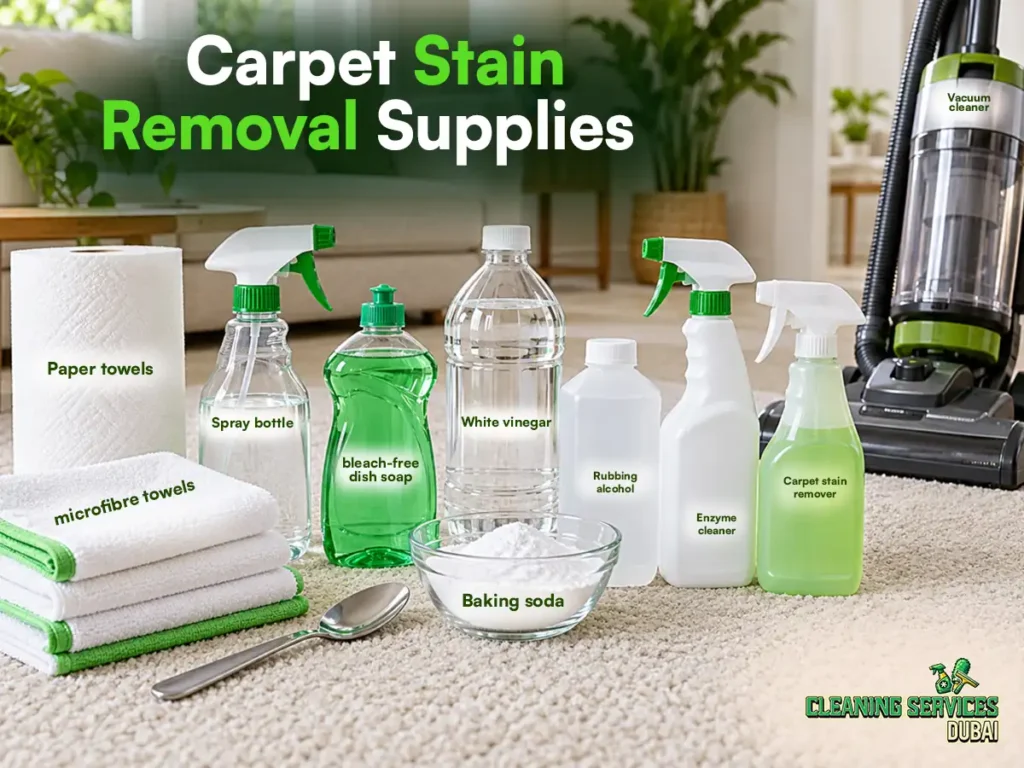
Knowing how to clean carpet stains starts with having the right kit. Keep these together in one cupboard so you can act within minutes.
| Supply | What it’s for |
|---|---|
| White cloths or microfibre towels | Blotting without transferring dye |
| Paper towels | Soaking up fresh spills fast |
| Spoon or blunt knife | Lifting solids and scraping dried residue |
| Spray bottle | Applying small, controlled amounts of solution |
| Clear, bleach-free dish soap | The basic cleaning solution for most spills |
| White vinegar | Tea, coffee, wine and brown marks on synthetic carpet |
| Baking soda or cornstarch | Absorbing grease and odours |
| Rubbing alcohol (70% isopropyl) | Ink, marker and lipstick |
| Enzyme cleaner | Pet urine, vomit and other organic stains |
| Carpet stain remover | Stubborn stains the home mix can’t shift |
| Vacuum cleaner | Removing dry dirt, sand and powder |
| Fan or dehumidifier | Drying the spot completely |
The best carpet stain remover is one made for your carpet material and stain type, so check the label before you buy a carpet stain remover spray. One product rarely works on everything.
Carpet Stain Removal Cheat Sheet
Find your stain, do the first step straight away, then use the treatment. Spot test first, and on wool, silk or Persian rugs stick to blotting with water before calling a professional.
| Stain | First step | What to use |
|---|---|---|
| Coffee and tea | Blot the liquid | Dish soap solution, then 1 part white vinegar to 2 parts water |
| Makeup | Scrape off the excess | Dish soap solution; rubbing alcohol for lipstick |
| Ink and marker | Blot without adding water | Rubbing alcohol on a white cloth |
| Pet urine | Soak up as much as possible | Enzyme cleaner |
| Blood | Blot with cold water | Cold water and dish soap; 3% hydrogen peroxide on light synthetic carpet only |
| Red wine and juice | Blot, then add a little cold water | Dish soap and white vinegar solution |
| Turmeric and curry | Scrape food, blot the oil | Dish soap solution, then rubbing alcohol |
| Grease and oil | Cover with cornstarch for 15 minutes | Vacuum, then dish soap solution |
| Mud and sand | Let it dry completely | Vacuum, then dish soap solution |
| Brown or water marks | Find and fix the source | 1 part white vinegar to 2 parts water, then dry fast |
| Chocolate | Scrape off the solids | Cool water and dish soap |
| Chewing gum | Freeze with ice for 10 minutes | Scrape it off, then dab residue with dish soap |
| Wet water-based paint | Blot quickly | Warm water and dish soap; dried or oil paint needs a professional |
How to Remove Different Types of Carpet Stains
Every method below assumes a synthetic carpet and a passed spot test (Step 4). On wool, silk and handmade rugs, blot with cold water only and get professional help.
Coffee and Tea Stains
Coffee, tea and karak chai contain tannins that leave brown or yellow rings. Blot, dab with the dish soap solution, then with 1 part white vinegar to 2 parts water. Rinse and press dry.
Milky or sweet drinks leave sticky residue, so rinse well. For full instructions, read our guide on how to remove coffee stain from carpet.
Makeup Stains
Most makeup is oil plus pigment, so water alone spreads it. If you’re wondering how to remove makeup stains from carpet, scrape off excess foundation or powder, then dab with the dish soap solution and blot.
To remove lipstick stains from carpet, dab a little rubbing alcohol on a white cloth and blot until no more colour lifts. To remove nail polish stains from carpet, use a non-acetone remover on a cloth, sparingly. Acetone can damage some fibres and carpet backing.
Ink, Marker and Crayon Stains
Ink spreads the moment you add water. Dab rubbing alcohol onto a white cloth, press it on the mark and lift. Move to a clean part of the cloth each time so the ink doesn’t go back down. The same method works when you need to remove marker stains from carpet.
For a crayon stain on carpet, scrape off the wax first. Then lay a paper towel over the mark and press briefly with an iron on low heat, without steam, to lift the remaining wax (synthetic carpet only). Treat leftover colour with rubbing alcohol. Permanent marker often needs a professional.
Pet Urine and Poop Stains
Urine soaks into the backing, so the smell stays even after the mark fades. To remove urine stains from carpet, blot up as much as you can, then apply an enzyme cleaner. Use enough to reach as deep as the urine went, and leave it for the time on the label. This is also the best way to get dog pee stains out of carpet once they’ve dried.
For poop, remove the solids with a bag, dab with the dish soap solution, then use the enzyme cleaner. Avoid ammonia-based cleaners: they smell like urine and can draw pets back to the same spot.
Blood Stains
Blood is a protein stain, and heat sets it permanently. Use cold water only, never hot water or steam.
To remove blood stains from carpet, blot with a cloth dampened in cold water and a few drops of dish soap. Soften a dried blood stain on carpet with cold water before blotting. On light synthetic carpet, a few drops of 3% hydrogen peroxide can lift what’s left; blot and rinse after 2 to 3 minutes.
Red Wine and Juice Stains
To remove wine stains from carpet, blot immediately, then pour on a little cold water and blot again to dilute the colour. Mix 2 cups lukewarm water, ½ teaspoon dish soap and 1 tablespoon white vinegar, dab it on and blot until the colour stops lifting.
Skip the old hacks of salt, white wine or milk. They add more residue without reliably removing the dye.
Turmeric, Curry and Saffron Stains
Turmeric is one of the most common stains in Dubai homes. Its yellow pigment, curcumin, clings to fibres but dissolves in alcohol.
To get turmeric stains out of carpet, scrape away the food, then blot the oil with the dish soap solution. Next, dab rubbing alcohol on a white cloth and blot the yellow mark. Repeat until it fades, then rinse. Saffron responds the same way; henna is far harder and usually needs a professional.
Grease, Oil and Food Stains
Scoop up the food, then cover the grease with cornstarch or baking soda. Leave it for 15 to 30 minutes to absorb the oil, then vacuum. Finish with the dish soap solution and a water rinse so the spot doesn’t turn sticky.
For a coloured food stain on carpet, such as ketchup, mustard or tomato sauce, follow up with the vinegar solution.
Mud, Sand and Dirt Stains
Dubai’s fine sand gets tracked in from balconies, cars and the beach. Let wet mud dry fully, break it up gently, then vacuum slowly from several directions to pull grit from the base of the pile. Treat any remaining mark with the dish soap solution. Black stains on carpet near entrances are usually oily street grime, and the same solution lifts them.
Brown and Water Stains
Brown patches usually appear when a carpet is over-wetted: dirt from the backing wicks up to the surface as it dries. AC leaks and ceiling drips leave the same kind of water stain on carpet.
Fix any leak first. Then blot the area with 1 part white vinegar to 2 parts water and dry it fast with a fan. A musty smell or a spreading dark patch can mean mould under the carpet. In that case, book mould cleaning in Dubai rather than treating the surface.
Chocolate, Gum and Paint Stains
Scrape off chocolate, then blot with cool water and dish soap. Hot water melts the fat deeper into the pile.
For chewing gum, hold a bag of ice on it for 10 minutes until it turns brittle, then scrape it off. Wet water-based paint comes out with warm water and dish soap if you act fast. Dried or oil-based paint needs a professional; never use paint thinner on carpet.
How to Get Old and Set-In Stains Out of Carpet
Old stains are harder because the spill has dried deep in the fibres. Getting stains out of carpet weeks later is still possible, but it takes patience and several rounds.
How to Treat Dried and Set-In Stains
To get old stains out of carpet, vacuum the spot and loosen any crust with a spoon. Lightly mist the area with lukewarm water to rehydrate it, wait 5 minutes, then apply the right treatment from the cheat sheet.
Let it sit for 5 to 10 minutes, blot, rinse and dry. Check the spot the next day and repeat if it has faded but not gone. If you’re wondering how to clean badly stained carpet or remove deep stains, scrubbing won’t help. Professional deep steam cleaning with hot water extraction reaches the backing where household methods can’t.
Why Do Carpet Stains Come Back After Cleaning?
A stain that reappears a day later is usually caused by one of two things:
- Wicking: the spill soaked into the backing or padding, and residue rises to the surface as the carpet dries.
- Leftover soap: cleaner that wasn’t rinsed out attracts fresh dirt, often leaving a white or grey patch.
To stop it, use less liquid, always rinse with plain water and press out moisture with a towel under your weight. If the stain keeps returning, the contamination is in the padding and needs professional extraction.
Can Carpet Be Permanently Stained?
Yes. The hardest stains to remove are permanent marker, henna, old turmeric, bleach spots and pet urine that has soaked through to the padding. Bleach doesn’t stain at all: it strips the dye, and that colour can’t be cleaned back.
Sunlight fading and earlier harsh treatments also change the carpet colour for good. Stop applying stronger chemicals once the fibres start to fade, and ask a professional about colour repair or patching instead.
Home Remedies for Carpet Stains (DIY Stain Removers)
A few kitchen basics handle most spills when you clean carpet at home. Natural doesn’t always mean safe, though: spot test each one and never mix them.
Baking Soda
Baking soda (bicarbonate of soda) absorbs grease and odours rather than dissolving colour. To clean carpet with baking soda, sprinkle it over a dry spot, leave it 15 minutes for odours or up to overnight for grease, then vacuum thoroughly.
It won’t lift dye stains like ink or wine on its own, so to remove carpet stains with baking soda, pair it with the dish soap solution.
White Vinegar
Vinegar for carpet stains works best on tannins, such as coffee, tea and wine, and on brown marks or soap residue. Mix 1 part white vinegar with 2 parts water, dab it on, blot and rinse.
To remove old stains from carpet with vinegar, let the solution sit for 5 to 10 minutes before blotting. Avoid it on silk, sisal and rugs with natural dyes.
Can You Use Vinegar and Baking Soda Together?
Not at the same time. Vinegar is an acid and baking soda is an alkali, so they cancel each other out. The fizz looks impressive, but the result is mostly salty water.
Use them one after the other instead: vinegar solution to lift the stain, blot and dry, then baking soda to absorb any leftover smell.
Dish Soap and Water
The basic ¼ teaspoon dish soap to 1 cup water mix from Step 5 is the most useful natural carpet stain remover you have. Use clear, bleach-free soap, as coloured soap can leave its own tint.
More soap doesn’t clean better. Extra soap leaves a sticky film that pulls in dirt.
Hydrogen Peroxide (Light Carpets Only)
3% hydrogen peroxide (the standard pharmacy strength) breaks down tough stains like blood, wine and turmeric, but it can also bleach colour. Use it only on light synthetic carpet after a spot test.
Dab a little on, wait 2 to 3 minutes, blot and rinse. Never use it on wool, silk or dark carpets, and never mix it with vinegar.
Shaving Cream
Plain white shaving foam contains mild cleaning agents that can lift light, everyday marks. Spread a thin layer, wait 30 minutes, blot, then rinse with a damp cloth. Avoid gels, menthol and coloured or scented formulas.
Rubbing Alcohol for Ink
70% isopropyl alcohol dissolves ink, marker, lipstick and turmeric pigment. Apply it to a white cloth, never straight onto the carpet, and keep the room ventilated. Test first, as it can loosen dye on some carpets.
Enzyme Cleaner for Pet Stains
Enzyme cleaners break down the proteins in urine, vomit and blood that cause lasting smells. Soap and vinegar mask them; enzymes remove them. Follow the label’s contact time and keep pets away until the area is dry.
Best Homemade Carpet Stain Remover (Recipe)
These three carpet stain remover DIY mixes cover most household spills. Make them fresh, label the spray bottle and spot test before use.
| Recipe | Mix | Best for |
|---|---|---|
| Basic spot cleaner | ¼ tsp clear dish soap + 1 cup (240 ml) lukewarm water | Food, drinks, mud and most fresh spills |
| Vinegar solution | 1 part white vinegar + 2 parts water | Coffee, tea, brown marks, soap residue |
| Wine and juice mix | ½ tsp dish soap + 1 tbsp white vinegar + 2 cups lukewarm water | Red wine, juice and coloured drinks |
Never add bleach, ammonia or hydrogen peroxide to these mixes. To clean carpet without a machine, careful blotting and thorough drying matter more than stronger ingredients.
How to Remove Stains from Different Carpet Types
The material matters as much as the stain. Check the care label first; a method that’s safe on a nylon bedroom carpet can ruin a silk rug.
Wool Carpet
Wool handles mild acids like diluted vinegar but is damaged by alkaline cleaners, bleach and heat. For fresh stains on wool carpet, blot with cold water and keep the area as dry as possible.
For anything more, choose a wool carpet stain remover labelled wool-safe. Never rub, as wool fibres felt and fuzz easily.
Synthetic Carpet (Nylon, Polyester, Polypropylene)
Most wall-to-wall carpets in apartments and offices are synthetic, and every method in this guide is written for them. Nylon is the most durable. Polyester resists water-based stains but holds onto oil. Polypropylene shrugs off most stains but can crush under heavy furniture. Car carpets are usually synthetic too, so if you’re working out how to clean car carpet stains, the same steps apply with even less water.
Sisal Carpet
Sisal is a plant fibre that stains, shrinks and warps when wet. Blot spills with a dry towel only. Water and shampoo can leave permanent water rings, so call a specialist for anything beyond a fresh, small spill.
Persian and Silk Rugs
Handmade Persian and silk rugs often use natural dyes that bleed easily. Silk loses its shine and turns rough after the wrong treatment, a damage that can’t be reversed.
Only blot with cold water, then get professional help. Our Persian carpet cleaning in Dubai starts with a fibre and dye test and uses pH-balanced detergents.
Wall-to-Wall and Office Carpet
Wall-to-wall carpet can’t be lifted to dry underneath, so use as little liquid as possible. In offices, vacuum daily and treat spills the same day before foot traffic grinds them in. For high-traffic floors, schedule office carpet cleaning in Dubai every 3 to 6 months.
What to Avoid When Removing Carpet Stains
When you’re learning how to remove carpet stains, the clean-up often causes more permanent damage than the spill itself. Avoid these five mistakes.
Rubbing or Scrubbing Too Hard
Scrubbing spreads the stain and leaves a fuzzy, flattened patch that stays visible after the colour is gone. Blot with gentle pressure; use a soft brush only on synthetic carpet.
Using Too Much Water
Pouring water on a stain pushes it into the padding, where it wicks back up, smells musty and can grow mould. Use a cloth to apply liquid, and press out the moisture afterwards.
Bleach or Untested Chemicals
Household bleach strips carpet dye in seconds and can void a manufacturer’s warranty. A product that works on clothes or tiles isn’t automatically safe for carpet, so always spot test.
Hot Water on Blood and Protein Stains
Heat cooks the proteins in blood, milk, egg and urine into the fibres. Use cold water on these, and avoid steam until the stain is fully out.
Mixing Cleaning Chemicals
Never mix bleach with ammonia or vinegar: both combinations release toxic gases. Don’t combine hydrogen peroxide and vinegar either. Use one product at a time and rinse with water before switching.
How to Prevent Carpet Stains in Dubai Homes
Prevention is cheaper than any stain treatment. Fine sand, outdoor shoes and family meals on the floor are the main culprits in Dubai homes.
- Doormats at every entrance: catch sand at the front door and balcony.
- A no-shoes rule: keeps oily street dirt off bedroom and living room carpets.
- Vacuum twice a week: sand acts like sandpaper on the pile, especially in hallways.
- A spot-cleaning kit: white cloths, dish soap and a spray bottle within reach.
- Stain-resistant carpet: when replacing flooring, a stain-resistant or stain-proof carpet buys you more time to blot, though no carpet is fully stain-proof.
- Carpet protector: a professionally applied protector helps spills bead on the surface.
- Keep the sofa clean too: drinks and food spilled on upholstery often drip onto the carpet below. Regular sofa cleaning in Dubai keeps both in good shape.
Our Carpet Cleaning Services
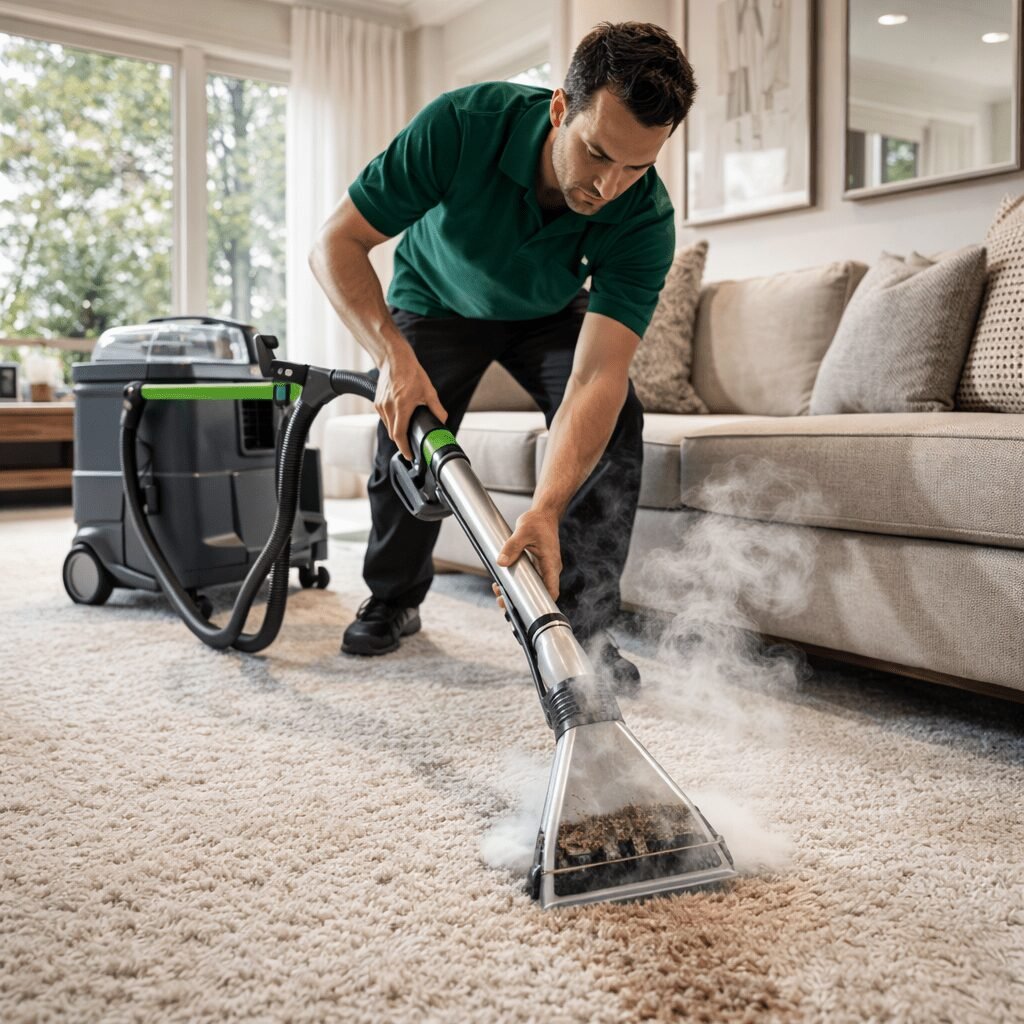
Call a professional when a stain keeps coming back after it dries, pet urine has soaked into the padding, a large area is stained or flooded, the carpet is wool, silk, sisal or a handmade Persian rug, or you need it inspection-ready before moving out. At Cleaning Services Dubai, our carpet cleaning services in Dubai start with an inspection and a fibre and dye test, so we choose the right treatment before any product touches your carpet, and we tell you honestly which stains are likely to come out. We use hot water extraction and steam cleaning, with pH-balanced detergents for wool, silk and Persian rugs, followed by controlled drying, so most carpets dry in 2 to 8 hours. Free rug pickup and same-day or next-day slots are available across 33+ Dubai areas, subject to availability. You get a fixed quote before we start, and if you’re not happy with a treated area, our 24-hour re-clean guarantee means we come back and re-clean it free.
Ready for stain-free carpets? Send a photo of the stain on WhatsApp (+971 56 929 2021) and get a fixed quote, usually within 10 minutes. Or book carpet cleaning in Dubai today. We’re open 8 am to 8 pm, 7 days a week.
Frequently Asked Questions
What happens if you leave baking soda on carpet too long?
Leaving baking soda on a dry carpet overnight is safe, but it becomes a problem if the carpet gets damp. Wet baking soda can cake, sink into the underlay and leave a white haze that’s hard to vacuum out. Use a thin layer, keep the area dry and vacuum slowly in several directions.
Can lemon juice remove carpet stains?
Lemon juice can lighten some stains, but it’s risky to use on carpet. Its acid acts as a natural bleach, especially in sunlight, and can fade carpet dye. Its sugars also attract dirt once dry. Diluted white vinegar does a similar job more safely, as long as you spot test first.
Is it better to steam clean or shampoo a carpet?
Hot water extraction, usually called steam cleaning, is better than shampooing for most carpets. It flushes dirt out of the pile and removes most of the cleaning solution with it, while shampooing can leave a sticky residue that attracts new dirt. Silk, sisal and some wool rugs need low-moisture cleaning instead.
What is the best carpet stain remover for old stains?
The best remover for an old stain depends on what caused it. Enzyme cleaners work on old pet urine, blood and food, oxygen-based removers suit old coffee, tea and wine on synthetic carpet, and a solvent spot remover is best for old grease. Test on a hidden area first, and avoid oxygen-based products on wool.
Are carpet stain removers safe for kids and pets?
Most carpet stain removers are safe for kids and pets once the area is rinsed and completely dry. Choose a product labelled pet-safe or non-toxic, run a fan or open a window while you work, and keep children and pets off the spot until it dries. Store cleaners and mixed solutions out of reach.
How often should carpets be professionally cleaned in Dubai?
Most Dubai homes should have their carpets professionally cleaned every 6 to 12 months. Homes with pets, young children or heavy foot traffic benefit from cleaning every 3 to 6 months, because fine sand and dust wear down carpet fibres faster. Regular vacuuming between visits helps carpets stay fresher for longer.
Can professional carpet cleaning shrink or damage a rug?
Professional cleaning can damage a rug if the wrong method is used, but a careful cleaner prevents it. Wool and sisal can shrink when over-wetted, silk can lose its sheen and natural dyes can bleed. Before booking, ask how the cleaner tests fibres and dyes, which method they will use and how long drying takes.
Why does my carpet smell after professional cleaning?
A musty smell after professional cleaning usually means the carpet or underlay is still damp. It should fade once the carpet dries, normally within a day. If it lasts longer, moisture may be trapped in the underlay, so contact your cleaner to re-extract the area and dry it with air movers.
What if a stain is still visible after professional cleaning?
Report it within 24 hours and Cleaning Services Dubai will come back to re-treat the area free under its 24-hour re-clean guarantee. Some marks, such as bleach spots or henna, are permanent dye damage. The team explains this during the inspection, so you know what to expect before cleaning starts.
How long does professional carpet cleaning take in Dubai?
Carpets usually dry within 2 to 8 hours after professional cleaning, depending on thickness and humidity. For rugs collected from your home, Cleaning Services Dubai confirms the return date when you book. Same-day or next-day appointments are offered across Dubai, subject to availability.
Best Practices for Quick Carpet Drying
Drying is the step most guides on how to remove carpet stains skip, yet it decides whether a stain stays gone. Apply cleaner sparingly with a cloth, then fold a thick towel over the spot and stand on it until no more moisture transfers. Point a fan across the area and run the AC or a dehumidifier, keeping windows closed in humid Dubai months. For a whole room or a soaked rug, Cleaning Services Dubai’s controlled extraction dries most carpets in 2 to 8 hours. Send a photo on WhatsApp for a fixed quote, or book professional carpet cleaning in Dubai today.
