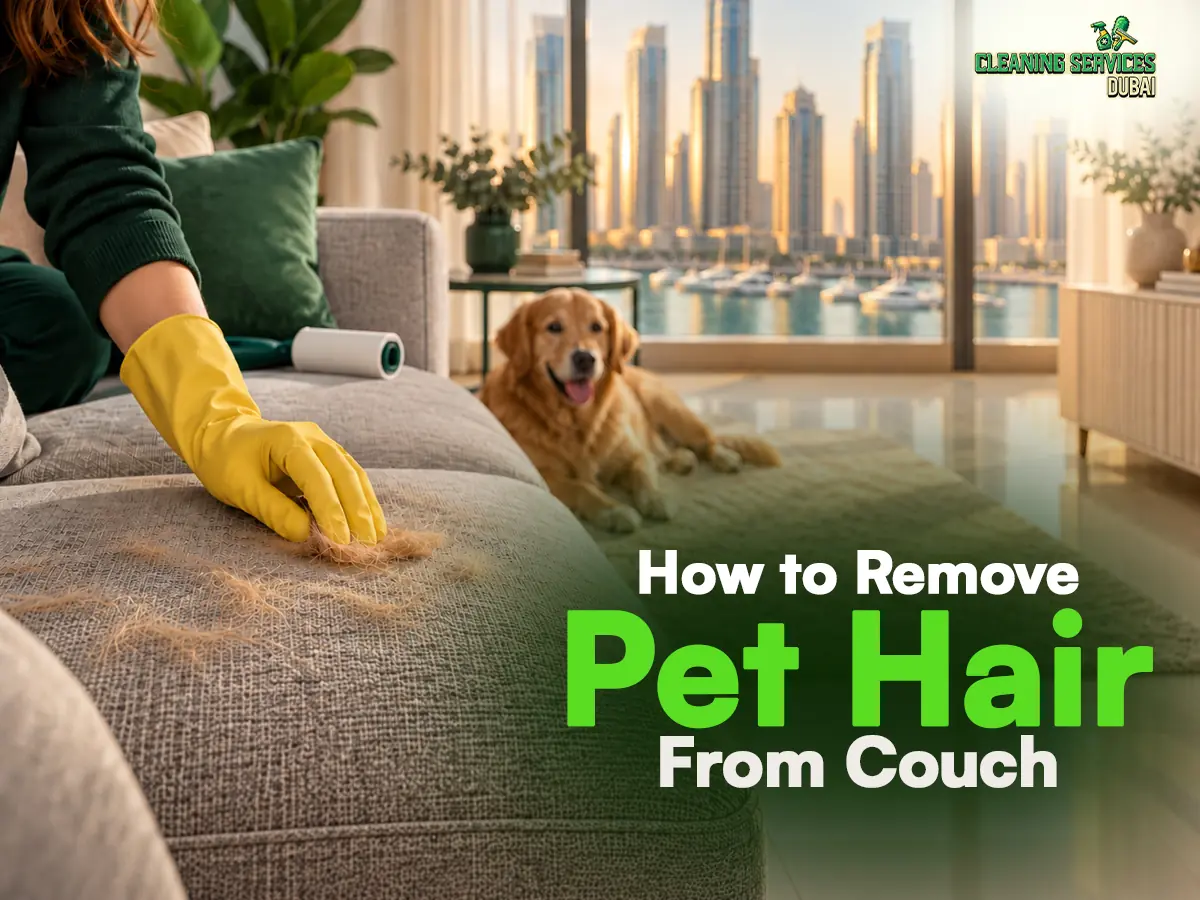
Living with pets in Dubai means enjoying their company while dealing with the fur they leave behind. In a Dubai Marina apartment or a family villa in Arabian Ranches, dog and cat hair can quickly cover sofa cushions, especially when air conditioning circulates dust and loose fur around the room.
Fortunately, learning how to remove pet hair from couch surfaces doesn’t require expensive cleaning equipment. A few household tools and the right technique can lift stubborn fur without damaging your upholstery.
This guide covers 10 practical methods, fabric-specific cleaning tips and simple habits to keep your couch looking its best.
Quick Answer
The easiest way to remove pet hair from a couch is to loosen trapped fur with a rubber glove or squeegee, then collect it using a vacuum with an upholstery attachment. Finish with a lint roller for stray hairs. Always check your sofa’s care label before using water or cleaning sprays.
Why Does Pet Hair Stick to Your Couch?
Ever wondered why your couch still looks furry just hours after cleaning? The problem isn’t always how much your pet sheds. It’s also how the hair interacts with the upholstery.
Static electricity attracts loose fur to synthetic fabrics such as microfiber, while textured materials like velvet and chenille give individual strands places to catch. Your pet’s natural coat oils can also leave residue on the fibres.
In Dubai’s air-conditioned homes, dry indoor air can make static cling more noticeable. Short, stiff dog hairs often become lodged between woven threads, while finer cat hair collects along cushion seams and favourite sleeping spots.
That’s why a quick vacuum doesn’t always do the whole job. You may need to loosen embedded strands before lifting them away.
Check Your Sofa Fabric Before Cleaning
Before reaching for a damp sponge or cleaning spray, look underneath your couch for its upholstery care label. That small tag can save you from watermarks, faded patches and damaged fibres.
Most fabric sofas use one of these cleaning codes.
| Care Code | What It Means | Suitable Approach |
|---|---|---|
| W | Water-based cleaning products allowed | Vacuum, rubber tools and carefully tested damp cleaning |
| S | Solvent-based cleaning only | Vacuum or gentle dry brushing; professional solvent cleaning where required |
| WS | Water-based or solvent-based cleaning allowed | Fabric-safe methods after a hidden spot test |
| X | Vacuuming or light brushing only | No liquid cleaners or wet treatments |
If the care tag is missing, begin with gentle dry methods and check the manufacturer’s instructions before applying moisture.
This is especially important for delicate upholstery found in furnished Dubai apartments and villas. A product labelled safe for upholstery isn’t automatically safe for every sofa. Test unfamiliar tools or solutions on a hidden section first.
10 Easy Ways to Remove Pet Hair From Couch
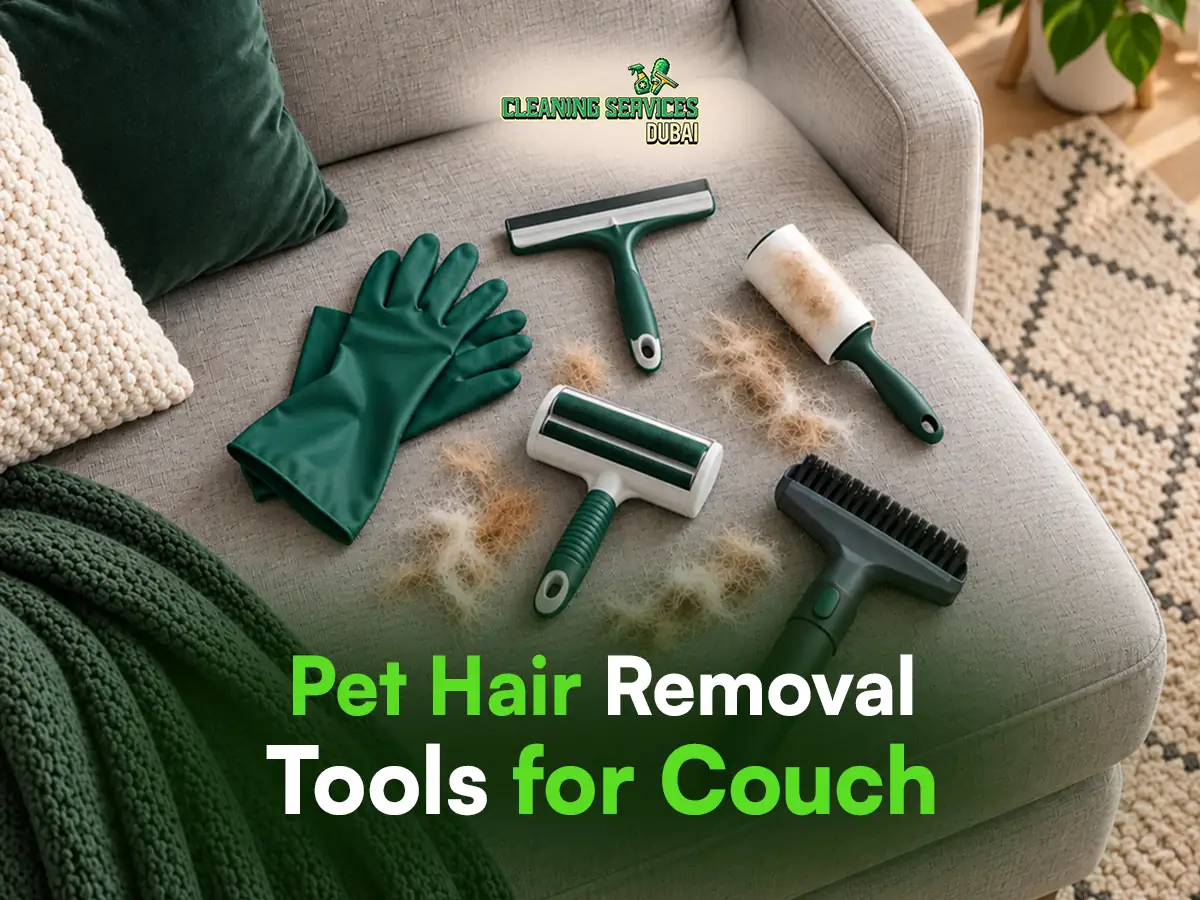
You don’t need a cupboard full of gadgets to get rid of stubborn fur. Most of these methods use everyday household items, and each works best for a slightly different cleaning problem.
1. Use Damp Rubber Gloves
A pair of ordinary washing-up gloves is one of the simplest ways to lift loose fur from fabric upholstery.
Put on the gloves, dampen them slightly and move your hands across the couch in one direction. The rubber creates friction, gathering the hair into small clumps that you can pick up easily.
Work across the seat cushions, armrests and backrest in sections. Rinse the gloves whenever they become covered in fur.
This trick works particularly well on compatible microfiber, cotton and tightly woven fabrics. For moisture-sensitive upholstery, use dry gloves instead.
2. Remove Embedded Hair With a Rubber Squeegee
Some dog hairs become so firmly trapped in the weave that your vacuum barely moves them. A small window squeegee can be useful here.
Hold its clean rubber edge against a durable fabric surface and pull gently towards yourself using short, straight strokes. You should see the trapped hair gathering into lines.
Collect the fur before moving to the next section.
A rubber squeegee works best on sturdy, textured upholstery, but avoid forceful scraping on velvet, bouclé or loose loops. Too much pressure can pull threads or change the fabric’s finish.
3. Vacuum With an Upholstery Attachment
A vacuum cleaner is essential for removing loose hair, dust and debris hiding between your sofa cushions.
Use a suitable vacuum cleaner for pet hair with a soft upholstery attachment. Move slowly over the seats and back cushions, using overlapping strokes rather than rushing across the fabric.
Take off removable cushions and vacuum both sides. Switch to the crevice nozzle for seams, piping, armrests and the narrow gap behind the seat.
In Dubai apartments, where fine dust can settle alongside pet hair, regular upholstery vacuuming is particularly useful. If you have a shedding dog, a motorised pet hair attachment may help on suitable durable fabrics. Check that the brush won’t snag the upholstery.
4. Use a Lint Roller or Packing Tape
Guests arriving in ten minutes? A lint roller is ideal for a quick touch-up.
Roll it gently over the armrests, seat cushions and other areas where hair transfers onto clothing. Replace the adhesive sheet once it becomes covered.
No lint roller available? Wrap a little packing tape around your hand, sticky side facing out, and dab the affected area.
Both methods work best on surface hair. Avoid strong adhesive tape on delicate velvet, loose weaves or fabrics that could snag.
5. Try a Pet Hair Removal Brush
A soft rubber or silicone brush is a useful pet hair remover when ordinary vacuuming leaves strands behind.
Move the brush gently in the direction of the fabric weave. Its flexible bristles can gather loose hair without the repeated expense of disposable adhesive sheets.
Choose a brush designed specifically for furniture rather than a stiff grooming tool meant for your pet’s coat.
For fine cat fur, a soft cat hair remover brush can be particularly convenient on cushion backs, headrests and your cat’s usual sleeping area.
Finish by vacuuming the collected strands.
6. Use a Pumice Stone or Pet Hair Stone
A pet hair stone can sometimes lift stubborn fur from tough, tightly woven materials. However, it’s one of the more aggressive methods on this list.
Test a tiny hidden section first. If the fabric passes, hold the stone flat and draw it lightly across the surface in short strokes, all in one direction. The hair rolls into small clumps that you can pick off or vacuum away. Stop immediately if you notice loose fibres, pilling or changes to the surface.
Never use an abrasive stone on velvet, chenille, delicate upholstery, leather or fabrics with raised loops.
For most household sofas, a rubber squeegee or soft upholstery brush is a safer starting point. Reserve a specialised stone for materials whose manufacturer permits this type of treatment.
7. Wipe With a Damp Microfiber Cloth or Sponge
If your sofa has light surface hair, a microfiber cloth or soft sponge may be enough.
Dampen the cloth slightly, wring out the excess water and wipe the fabric in one direction. Loose strands collect along the edge of the cloth instead of spreading across the cushions.
Rinse it regularly so you’re not dragging collected fur over areas you’ve already cleaned.
Only use this technique on water-compatible upholstery. Some fabrics develop water rings even after light wiping, so dry methods are preferable when you’re unsure.
8. Reduce Static With Fabric Softener Spray or Dryer Sheets
Static cling is one reason pet fur keeps sticking to upholstered furniture, particularly in dry, air-conditioned rooms.
A light anti-static mist can help on Code W fabrics. Mix about one teaspoon of liquid fabric softener into a 500 ml spray bottle of water, test it on a hidden area, then mist the cushion lightly from a distance. Once the fibres relax, wipe with a rubber glove or upholstery brush to gather the hair. For a quick touch-up on compatible fabrics, rubbing a dryer sheet gently over the surface works in a similar way.
Use both sparingly, because fragrances and softening agents can leave marks, attract dirt or change the feel of certain fabrics. Never spray them onto Code S or X fabrics.
For everyday cleaning, a dry rubber tool followed by vacuuming is usually the simpler option.
9. Try a Reusable Pet Hair Roller
If your cat or dog spends every afternoon on the sofa, a reusable roller can make daily cleaning less of a chore.
These rollers use textured collection surfaces to pick up loose strands as you move them back and forth. Many have a built-in compartment that holds the hair until you empty it.
Unlike disposable lint rollers, you don’t need to replace adhesive sheets after every use.
A reusable pet hair remover for couch cushions is particularly useful for regular surface cleaning. Choose a model suitable for your upholstery and avoid pressing too hard on delicate fabrics.
10. Wash Removable Sofa Covers
If your couch has machine-washable covers, cleaning becomes much easier.
Remove the covers according to the manufacturer’s instructions, shake off the loose hair outdoors and wash them on the recommended cycle.
Avoid overloading the washing machine, as tightly packed fabrics may not rinse properly. Dry the covers exactly as directed to prevent shrinkage.
Don’t assume a zip means a cover can be machine-washed. Some removable upholstery covers still require specialist cleaning.
For pet owners, a separate washable throw can be even more convenient than repeatedly removing the sofa covers.
How to Remove Dog and Cat Hair From a Couch
Dog and cat fur can behave differently on upholstery. The cleaning principles are similar, but knowing where the hair collects and how firmly it sticks makes the job easier.
How to Get Embedded Dog Hair Out of Couch Cushions
If you’re wondering how to remove dog hair from couch cushions, pay special attention to the hidden areas rather than cleaning only the top.
Short, stiff hairs can lodge inside woven upholstery, especially where your dog regularly sits or sleeps.
Remove the loose cushions and inspect their sides, undersides and seams. Use a suitable rubber brush or squeegee to loosen stubborn strands, then vacuum the exposed surfaces.
Work gently along the cushion piping, where fur often collects in narrow gaps.
For households with heavily shedding breeds such as Labradors, German shepherds and huskies, regular grooming can make this job considerably easier.
How to Get Cat Hair Off Couch Fabric
Cats tend to leave fine fur in their favourite resting places, particularly on armrests, headrests and soft cushions.
To remove cat hair from couch fabric, start with a gentle reusable roller or soft-bristle upholstery brush. Follow with an upholstery vacuum attachment to collect the strands.
For delicate velvet, brush lightly in the direction of the pile. On compatible microfiber, a rubber glove may work better for hair clinging to the surface. If the fabric also needs a proper clean, follow our guide on how to clean a microfiber couch.
The trick is to clean the places your cat actually uses rather than spending equal time on every part of the sofa. This is especially practical in compact Dubai apartments, where a single sofa may be the main lounging spot for both you and your pet.
How to Clean a Couch After Your Dog or Cat Has Been on It
Pet hair isn’t the only thing left behind after a long afternoon of cuddles. Natural body oils, dander, muddy paws and occasional accidents can leave upholstery looking dull or smelling unpleasant.
Removing these residues requires a different approach from simply picking up loose fur.
Removing Pet Odour From Your Sofa
A couch that smells like your pet may be holding onto body oils, saliva, dirt or other residues beneath the surface.
Start by vacuuming the cushions, seams and surrounding areas. Wash removable throws and covers according to their labels, then allow the upholstery to air out.
Baking soda can help as a household deodoriser on dry, Code W or WS upholstery. Sprinkle a thin, even layer over the cushions, leave it for 15–20 minutes, then vacuum it thoroughly with the upholstery attachment. Go over the seams twice, because fine powder can collect there.
If odours remain, choose a fabric-compatible upholstery deodorising treatment rather than masking the smell with strong perfume. In Dubai homes where windows stay closed during the hotter months, proper ventilation and thorough drying are particularly important after wet cleaning.
Cleaning Pet Urine From a Couch
Pet accidents need quick attention because urine can soak through the upholstery into the cushion filling.
If you’re searching for how to clean dog pee from couch fabric, start by blotting the fresh liquid with clean, absorbent towels. Press gently without rubbing, as scrubbing spreads the moisture.
For Code W or WS upholstery, a suitable enzyme-based pet urine cleaner may help break down odour-causing residue. Always follow the product instructions and test compatibility first.
Avoid saturating the cushion, using hot water without guidance or mixing cleaning chemicals.
If the urine has reached the foam, surface cleaning may not be enough. Professional treatment or cushion replacement may be necessary for severe contamination.
If the accident also reached your rug, our guide on how to remove carpet stains explains how to treat urine on carpet.
Best Pet Hair Removal Methods for Different Sofa Fabrics
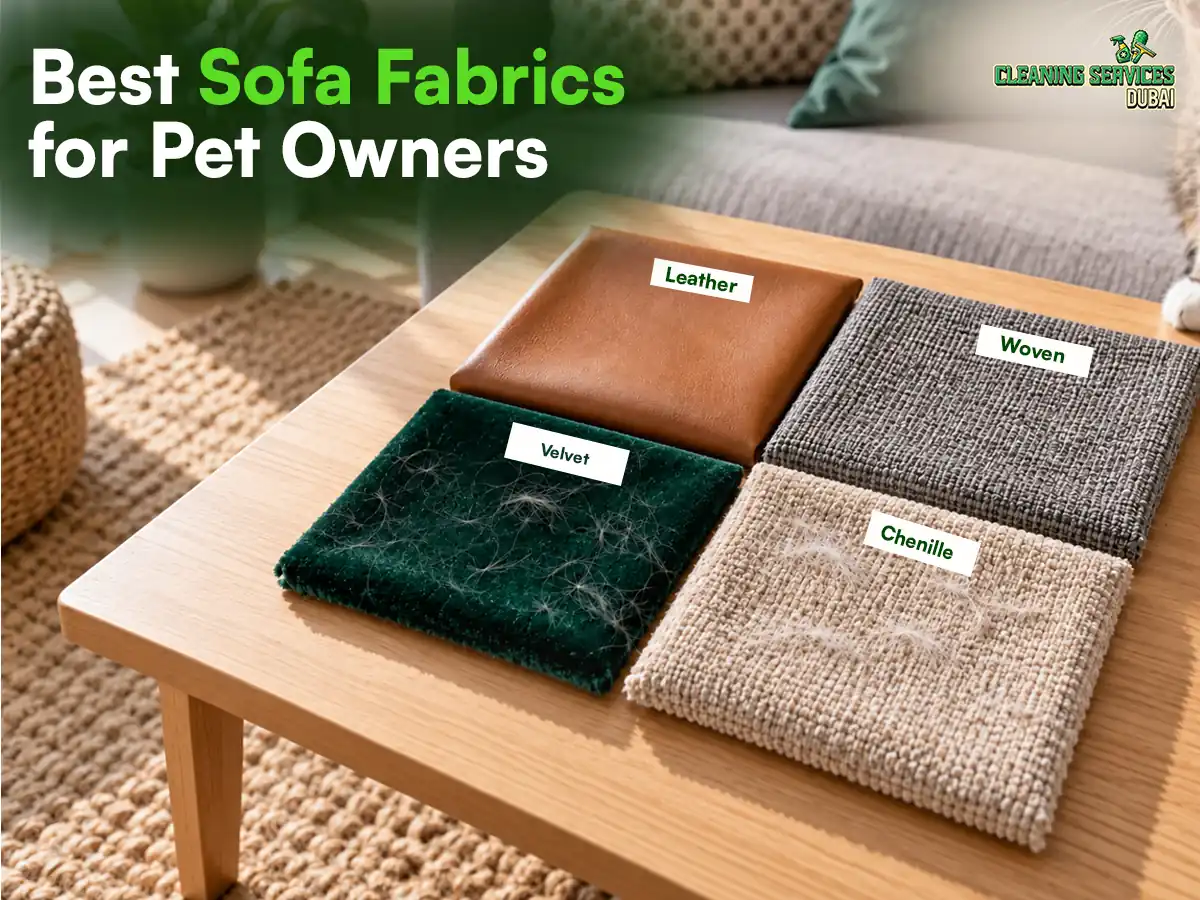
Not all sofas react the same way to water, brushes or cleaning products. Before you clean a fabric couch, match the tool to the material and check the manufacturer’s care instructions.
| Sofa Fabric | Best Removal Method | What to Avoid |
|---|---|---|
| Microfiber | Dry rubber gloves and gentle upholstery vacuum | Unapproved wet wiping and aggressive scrubbing |
| Velvet | Soft-bristle brush or suitable gentle roller | Stiff brushes, abrasive stones and brushing against the nap |
| Chenille | Light vacuuming and gentle rubber tools where suitable | Sharp scrapers and tools that snag loops |
| Linen | Soft upholstery brush and vacuum | Excess water and harsh rubbing |
| Cotton | Upholstery vacuum and fabric-safe rubber glove | Over-wetting and strong chemicals |
| Leather | Soft dry microfiber cloth | Abrasive tools and unsuitable detergents |
| Polyester | Vacuum, soft rubber brush or roller | Excessive friction and untested sprays |
Pet Hair, Dander and Allergies in Dubai Homes
A sofa can look clean while still holding fine dust, pet dander and other particles inside the upholstery.
Dubai’s dusty outdoor conditions and frequent air-conditioning use make regular indoor cleaning important. When AC filters become dirty, airborne particles can circulate through living spaces. Pet dander contains tiny skin flakes that may trigger allergy symptoms in sensitive people.
An air purifier for pet hair with an appropriate HEPA filter may capture some airborne dander and fine particles. However, it won’t remove fur already trapped inside sofa cushions.
Regularly vacuum upholstery, maintain your AC filters and wash pet bedding. If your dog or cat sleeps on the bed, our mattress cleaning services in Dubai can also help address accumulated dust and everyday residues.
For residents of busy Dubai apartment buildings, a consistent cleaning routine is more practical than waiting for visible dust or fur to build up.
Common Mistakes to Avoid When Removing Pet Hair
A few common cleaning habits can turn a simple job into damaged upholstery.
- Using too much water: Excess moisture can leave rings, soak cushion foam and increase drying time.
- Scrubbing too hard: Aggressive brushing can damage delicate fibres, crush velvet pile or cause pilling.
- Using the wrong vacuum head: A stiff rotating brush may pull threads from loosely woven fabrics.
- Ignoring seams and crevices: Fur left underneath cushions can quickly spread back onto the cleaned seats.
- Applying untested household sprays: Fabric softeners, vinegar mixtures and fragranced cleaners can leave unwanted residue.
- Using abrasive pet hair stones everywhere: These belong only on suitable, durable materials and can permanently damage ordinary sofa fabric.
The safest cleaning method is the one your upholstery can tolerate, not necessarily the strongest tool available.
How to Prevent Pet Hair From Building Up on Your Sofa
Keeping pet hair under control is easier when cleaning becomes part of your normal routine. In Dubai, where busy workdays and long commutes leave little time for household chores, a few minutes of regular maintenance can save you a much bigger job at the weekend.
Start with your pet’s favourite sleeping spot and build a routine around it.
- Daily: Brush your pet as needed and use a lint roller on the most frequently used cushions.
- Weekly: Vacuum the sofa, including its seams, armrests and cushion undersides. Wash pet throws and bedding as directed.
- Monthly: Check hidden areas for accumulated dust, dander and stubborn fur. Inspect removable covers for stains or odours.
- During heavier shedding: Groom your pet more frequently with tools appropriate for its coat.
If you’re also wondering how to clean a dusty couch, regular upholstery vacuuming is a good first step. Use a soft attachment and work across the fabric slowly to collect dust before it settles deeper into the weave.
A washable throw over your pet’s favourite seat is another easy win. It’s much simpler to clean one blanket than an entire sofa every few days.
When Should You Get Professional Sofa Cleaning?
Sometimes the couch needs more than a lint roller and a weekend vacuum.
If embedded hair keeps returning, stains remain visible or pet odours linger after cleaning, a professional upholstery treatment may be worth considering.
This is particularly useful for heavily used family sofas, large sectionals and delicate upholstery in Dubai homes where everyday cleaning isn’t enough.
Our Sofa Cleaning Services in Dubai
At Cleaning Services Dubai, we don’t just freshen the visible cushions. Our sofa cleaning service in Dubai is designed to address built-up dirt, embedded pet hair, stains and unpleasant odours with cleaning methods suited to your upholstery.
Here’s how we approach a sofa that needs deeper attention:
- Inspection and spot testing: We check the fabric, care instructions and affected areas before selecting a cleaning method.
- Pre-vacuuming: We remove loose pet hair, dust and debris before introducing upholstery cleaning products.
- Targeted stain treatment: Suitable treatments are selected for food stains, body oils and pet accidents. Urine contamination may require specialist enzyme treatment after confirming fabric compatibility and availability.
- Deep upholstery cleaning: We use an appropriate method, such as shampoo cleaning, extraction or low-moisture cleaning, according to the material and condition.
- Controlled drying and final checks: Excess moisture is removed where possible, and we advise you when the sofa is ready to use again.
Most fabric sofas dry within 2–4 hours after wet cleaning, depending on the material, cleaning method, room ventilation and humidity.
For a breakdown by sofa size and fabric, see our sofa cleaning price guide.
Our published 24-hour re-clean guarantee covers eligible cleaning checklist items that were missed and reported within 24 hours. It does not guarantee removal of every permanent stain or deeply penetrated urine odour.
From high-rise apartments in Downtown Dubai to family villas in JVC, our cleaners can help homeowners deal with stubborn upholstery dirt without sacrificing their weekend.
Need upholstery cleaning in Dubai for armchairs, ottomans or headboards too? Send us photographs of your furniture, tell us the fabric type and describe the problem. We’ll help you understand the suitable cleaning options and provide a quotation before booking.
Call Cleaning Services Dubai on +971 56 929 2021, message us on WhatsApp or book your sofa cleaning today.
Frequently Asked Questions
How can I get rid of dog hair around the whole house?
Groom your dog outside and clean the floors more often during shedding season. Brushing on the balcony keeps loose hair out of the living room. Put a washable mat where your dog likes to rest, and vacuum floors and rugs two or three times a week with a HEPA vacuum. On tiles and wooden floors, a rubber broom gathers hair without scattering it.
What fabric spray repels pet hair?
An anti-static protector spray made for upholstery is your best option. It reduces how much hair clings, so cleaning takes less time. No spray makes a sofa completely hair-proof, though. Pick one that suits your sofa’s care label, test it under a cushion first and reapply after deep cleaning.
Does vinegar dissolve pet hair?
No, vinegar doesn’t dissolve pet hair. Some guides suggest diluted vinegar to reduce static, but you don’t need it to remove fur. It can also be unsuitable for some upholstery, so check your care label before trying it.
What do detailers use to remove pet hair?
Most car detailers use rubber brushes, special pet hair tools and strong vacuums with upholstery attachments. Some also use carpet scrapers, but those are made for tough car carpets. Avoid them on your sofa, as they can pull threads and damage the fabric.
Can I tumble dry sofa covers to remove pet hair?
Yes, if the care label allows tumble drying. Put the covers on a low or no-heat cycle for about 10 minutes before washing. This loosens the hair, and the lint filter catches much of it, so less ends up in your washing machine. Clean the filter afterwards and skip this step for delicate covers.
Why does pet hair keep coming back after I clean the couch?
Usually because some hair was never fully removed. Fur hides in seams, zips and the base under the seat cushions, then works its way back up each time someone sits down. Lift the cushions when you clean, and unzip removable covers now and then, as fine fur can collect inside them.
What fabric won’t dog hair stick to?
Smooth leather, faux leather and tightly woven performance fabrics release dog hair most easily. No sofa is completely hair-proof, but these materials hold far less fur than velvet, chenille or other textured fabrics. If you’re buying a new couch for a pet-friendly home in Dubai, choose an easy-care fabric with removable, washable covers.
What is the best way to deep clean a fabric couch?
It depends on your sofa’s care label. If it shows W, vacuum first, then mix a few drops of mild upholstery shampoo into warm water. Clean one small section at a time with a soft brush, blot with a dry towel and wipe off any residue with a barely damp cloth. Dry it with a fan. If the label shows S or X, leave deep cleaning to a professional.
Is professional sofa cleaning safe for pets?
Yes, as long as the products suit your upholstery and are used as directed. Ask your cleaner which products they use, and keep pets off the sofa until it’s completely dry. That usually means keeping them in another room during cleaning and for a few hours afterwards.
Why does my sofa smell after cleaning?
It’s usually moisture that hasn’t dried, leftover cleaning product or dirt deep inside the cushions. Run a fan or the AC to help the sofa dry fully. If the smell is still there once it’s completely dry, ask a professional to check the cushions and find the source.
A 5-Minute Daily Routine for Pet Owners
Keeping pet hair under control doesn’t have to take over your evenings. Spend two minutes brushing your pet, another two collecting loose fur with a roller, and the final minute checking the cushion seams and favourite sleeping spots.
Once a week, give the entire sofa a proper vacuum and wash the removable pet throws. In a busy Dubai household, that simple routine stops how to remove pet hair from couch cushions from becoming a weekly headache.
And when everyday maintenance isn’t enough, Cleaning Services Dubai is ready to take care of the deeper cleaning. Book a professional sofa cleaning appointment and enjoy a fresher, more comfortable living room without spending your weekend working on stubborn stains and embedded fur.
