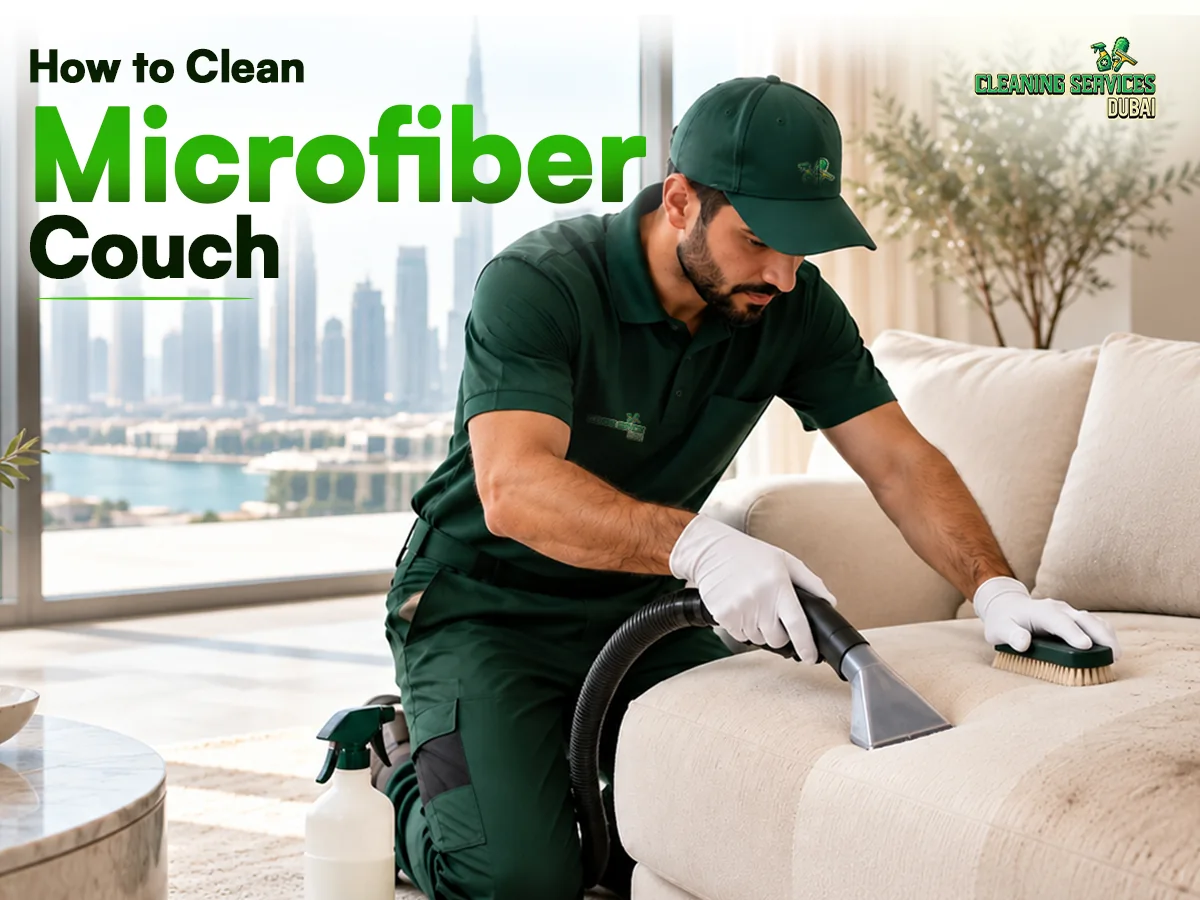
A microfiber couch can handle everyday family life, but spilled coffee, greasy fingerprints and dusty cushions can soon make it look tired. Knowing how to clean microfiber couch fabric correctly makes a real difference. Use the wrong product and you could end up with water rings, faded patches or a rough finish.
If you’ve been asking, “How do I clean a microfiber couch without making the stains worse?” the answer starts with the fabric care label. This guide shows you how to clean a sofa at home using simple tools, the right cleaning solution and careful drying techniques suited to Dubai homes.
Check Your Microfiber Couch Cleaning Code First
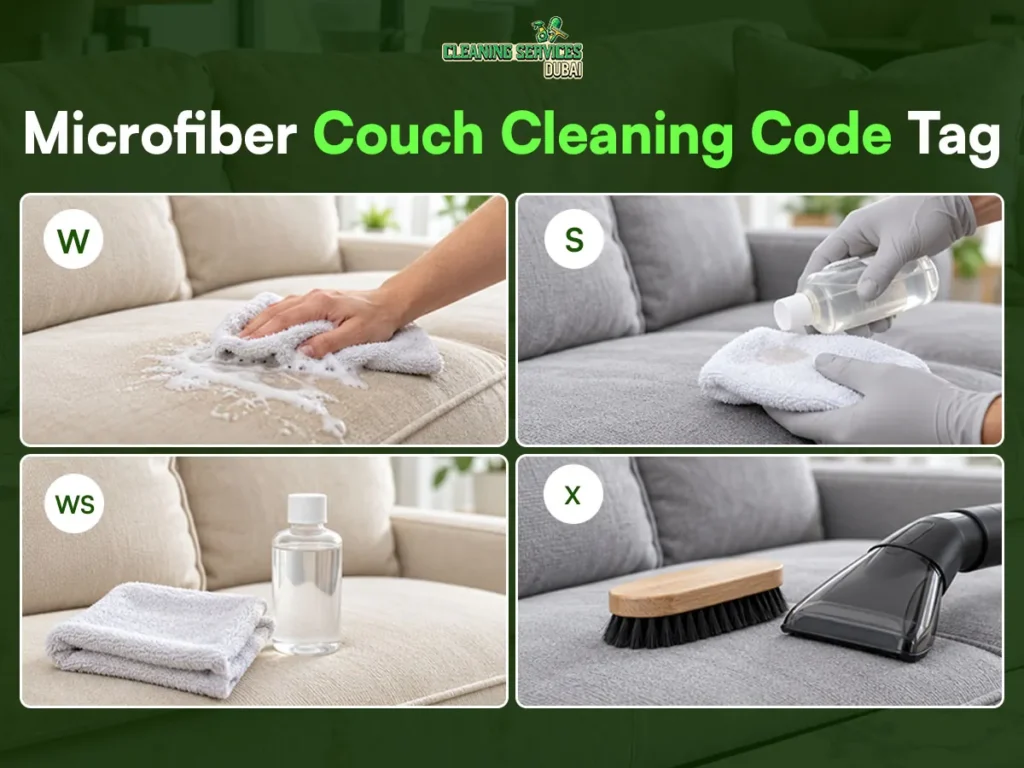
Before reaching for soap or a spray bottle, look under the seat cushions or along the underside of the frame. Most sofas have a manufacturer’s care tag that tells you which products the upholstery can tolerate. Microfiber is usually made from very fine polyester or blended synthetic fibers, but different finishes require different treatment.
| Code | What it means | What you can use |
|---|---|---|
| W | Water-based cleaner | Mild soap suds or a fabric-approved water-based product |
| S | Solvent-based cleaner | Manufacturer-approved water-free upholstery solvent |
| WS / SW | Either method | Approved water-based or solvent-based cleaner |
| X | Vacuum or brush only | No liquid cleaning products |
Can’t find the tag? Don’t guess. Ask the furniture manufacturer or a qualified upholstery cleaner before applying liquid.
What You Need to Clean a Microfiber Couch
You don’t need a cupboard full of expensive products for routine microfiber couch cleaning. Gather a vacuum with an upholstery attachment and crevice tool, a soft-bristled brush, clean white cloths, a bowl and a fan. A lint roller also comes in handy for pet hair.
For W or WS fabric, keep mild liquid dish soap and water ready. For S or WS fabric, keep an upholstery solvent approved by the care instructions, such as rubbing alcohol. Cornstarch and baking soda are useful optional extras.
Always use white cloths to avoid transferring dye onto pale cushions. Keep any cleaning product away from children and pets during treatment.
How to Clean a Microfiber Couch Step by Step
If you want the best way to clean microfiber sofa upholstery without a specialist machine, work carefully rather than trying to wash the entire couch at once. These six steps explain the basic process; the amount of moisture you can use depends entirely on the cleaning code.
Step 1: Vacuum the Couch Thoroughly
Remove loose cushions and vacuum the seats, arms, backrests and gaps between them. Run the crevice tool along stitched seams where crumbs, sand and dust collect. Don’t skip this stage: wetting loose dirt can spread it into muddy-looking streaks. For anyone wondering how to clean dusty couch surfaces, regular thorough vacuuming is the first answer.
Step 2: Test Your Cleaner on a Hidden Spot
Apply a tiny amount of the code-approved product beneath a cushion or behind the sofa. Let it dry fully, then check for fading, color transfer, stiffness or new marks. A product that worked on a previous couch may react differently with this one. If the test leaves any change, stop rather than treating a visible area.
Step 3: Apply the Right Cleaner for Your Code
Use light soap suds on W or WS upholstery and a small amount of an approved solvent on S or WS upholstery, working on one small section at a time. With X-coded fabric, stop after vacuuming and gentle dry brushing. The methods below explain each option in detail.
Step 4: Gently Agitate and Blot
Use a soft cloth to loosen light surface soil, applying very little pressure. For a fresh spill, press a dry white towel onto the area to absorb liquid before treating the remaining mark. Work from the edge toward the center to keep the stain from spreading. Hard scrubbing can flatten the upholstery’s soft nap and make the patch more noticeable.
Step 5: Remove Soap Residue
On W or WS fabric cleaned with suds, use a second cloth that is only barely damp with clean water to pick up leftover soap. Blot with a dry towel. Never rinse an S-coded or X-coded sofa with water. Leaving detergent behind can make water-safe microfiber sticky or stiff, but soaking the cushion to remove it creates a bigger problem.
Step 6: Brush the Fibers So the Couch Doesn’t Feel Rough
Let the cleaned section dry completely before touching the nap. Then gently brush with a clean, soft-bristled upholstery brush to lift flattened fibers. Use short, light strokes instead of vigorous scrubbing. This finishing step helps restore the suede-like feel of your microfiber sofa without damaging its surface.
Best Cleaning Methods for Microfiber Couches
Different products solve different problems. The safest choice isn’t the strongest cleaner on the shelf; it’s the one that matches your sofa’s care label and the stain you need to remove.
How to Clean a Microfiber Couch with Soap and Water (W / WS)
Mix a few drops of mild, clear dish soap into a bowl of water and whisk up light suds. Scoop up the foam with a white cloth and gently dab the dirty upholstery. This approach is useful for general grime on water-safe fabric. Stop if color starts transferring or the material becomes excessively wet.
How to Clean a Microfiber Couch with Rubbing Alcohol (S / WS)
Some S- and WS-coded sofas allow isopropyl rubbing alcohol, which evaporates faster than water. Only use it if the manufacturer’s guidance approves it. Test first, apply a little to a white cloth and dab the stain instead of spraying an entire cushion. Open windows if outdoor conditions permit, keep the room ventilated and stay well away from flames, sparks and heat sources: alcohol is flammable.
Can You Use Vinegar or Baking Soda on Microfiber?
White vinegar isn’t a universal upholstery cleaner. On some W-coded fabrics, a diluted solution may be acceptable, but acidity can affect dyes or finishes. Check the care instructions before trying it. Baking soda can absorb mild surface smells on some dry upholstery, yet fine powder may be hard to remove from seams. Test first, vacuum thoroughly and never use either product as a substitute for treating the source of pet urine.
How to Clean a Microfiber Leather Couch
The term microfiber leather often describes a synthetic leather-look material rather than the soft, woven microfiber discussed in this guide. If your couch has a coated, leather-like surface, follow its specific manufacturer’s instructions. Don’t assume soap suds, alcohol or a fabric brush will be suitable: solvents can damage a protective coating. Check the product label before using any upholstery treatment.
Can You Wash Microfiber Couch Cushion Covers?
If you’re looking up how to clean microfiber couch cushions, start with the covers. Only machine-wash removable covers when their care label explicitly allows it. A zip doesn’t automatically mean a cover is washable. Check the recommended water temperature, detergent and drying method, and consider the risk of shrinking or color variation. If washing is permitted, follow the label and avoid putting covers back on while damp. Never soak attached cushion foam or padding.
How to Remove Stains from a Microfiber Couch
The sooner you deal with a spill, the less chance microfiber couch stains have to settle into the fibers. If you’re searching for how to remove stains from sofa upholstery, start by blotting and identifying the stain. A commercial sofa stain remover is only worth using if its label matches the furniture’s cleaning code. Many fabric sofa stains need different treatment, so a single DIY mixture won’t fix every mark.
| Stain | First action | What to avoid |
|---|---|---|
| Water ring | Let the area dry and assess the mark | Spot-wetting only the ring, which can leave a new outline |
| Grease or oil | Blot and absorb fresh oil with cornstarch if suitable | Rubbing, which pushes oil deeper into the fibers |
| Ink | Blot carefully without spreading | Hairspray or nail polish remover, which can damage dyes |
| Coffee or juice | Absorb liquid with a white towel | Hot water, which can help set the stain |
| Pet urine | Blot immediately | Ammonia-based cleaners, which smell like urine to pets |
Water Stains and Water Rings
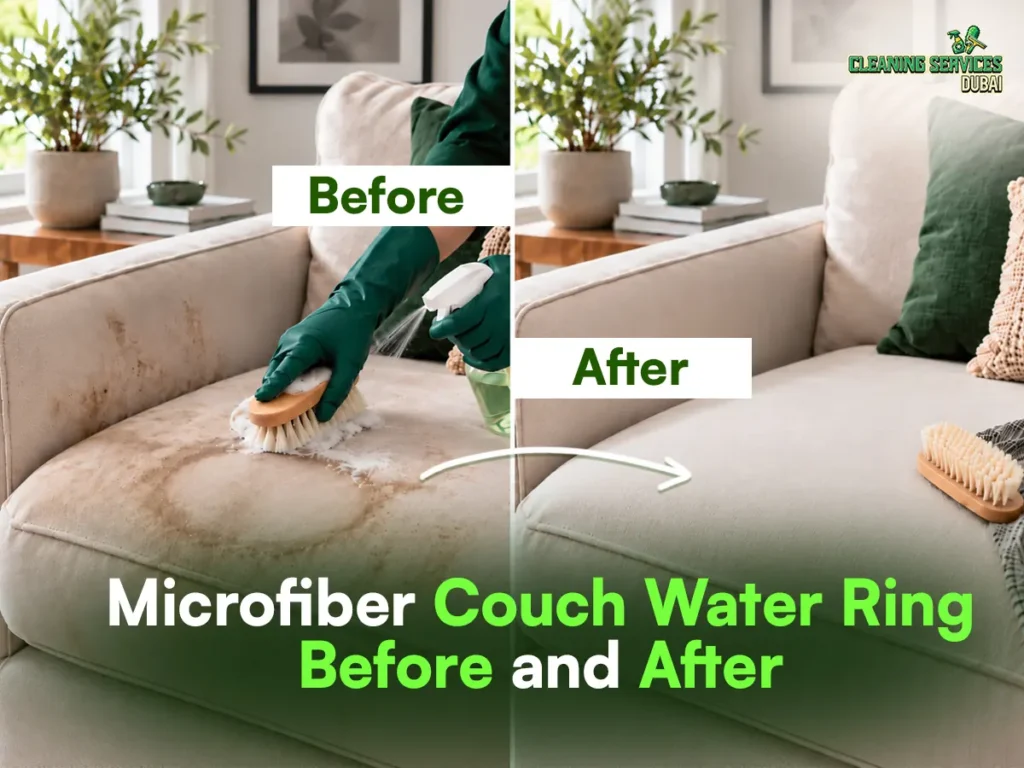
Watermarks often appear when a cushion gets too wet or dries unevenly. Don’t keep scrubbing the ring with more water. For W or WS fabrics, an approved light treatment across the affected panel may improve the appearance, but test first and dry evenly. Use distilled water instead of tap water, as minerals in tap water can leave a fresh outline as they dry. Diluted white vinegar can also help: on W-coded fabric, mix a little with distilled water to lift a fresh watermark, testing it on a hidden spot first. Water stains are rarely permanent when treated early, but with S-coded upholstery or older watermarks, it’s safer to let an upholstery specialist check the fabric.
Grease and Oil Stains
Cooking grease, skin oils and oily hands can leave dark patches on armrests. Blot fresh oil, then use a little cornstarch only if dry powder is appropriate for the fabric. Let it absorb the oil and vacuum carefully. Treat any remaining mark with the cleaner permitted by the care code. Avoid applying heavy-duty degreasers directly to delicate upholstery.
Ink and Pen Marks
Pen leaks and marker scribbles need a controlled approach. Don’t rub an ink stain across the seat. If the care label permits an alcohol-based treatment, dab a tested product sparingly with a white cloth or cotton pad, changing to a clean area as ink transfers. Permanent marker or large stains may not come out completely, so stop before the fabric color begins to lift.
Food and Drink Stains
Scoop up loose food without pushing it into the weave. For coffee, juice or milk, press a clean towel over the liquid first. Once the excess is gone, use a code-compatible spot cleaner in small amounts. Chocolate and dried sauce may need gentle dry loosening before spot cleaning. Avoid flooding the area; retained milk or food residue inside the padding can cause persistent odors.
Pet Urine, Vomit and Odors
Pet accidents need more than a pleasant-smelling spray. Blot moisture immediately and remove any solids carefully. A fabric-safe enzymatic cleaner may help break down organic residue, but it must be compatible with the care code and cushion construction. If urine has soaked into foam or the smell keeps returning, surface cleaning probably won’t reach the source. That’s the point to call an upholstery professional.
Can You Steam Clean or Use a Carpet Cleaner on a Microfiber Couch?
Steam cleaners and portable upholstery extractors can clean some furniture, but they’re not safe for every microfiber finish. Even a W or WS label doesn’t automatically approve high heat or machine extraction. Follow the sofa manufacturer’s directions and the machine’s upholstery instructions before attempting either method.
Avoid wet extraction on S- or X-coded upholstery. If the whole couch needs deep cleaning, a professional upholstery cleaner is a better choice than experimenting with a carpet-cleaning machine. For W- or WS-coded fabrics that allow it, professional steam cleaning with controlled heat and moisture is safer than a household steamer.
Common Mistakes to Avoid When Cleaning Microfiber
A quick DIY clean can become an expensive mistake when the wrong tools or chemicals touch the fabric. Watch out for these common problems:
- Ignoring the care tag: Water on S-coded fabric or liquid products on X-coded upholstery can cause visible damage.
- Skipping vacuuming: Dust and crumbs can smear when cleaner is applied.
- Scrubbing with a hard brush: Excessive pressure can mat the fibers, create a worn patch or fade the color.
- Soaking the seat cushions: Moisture trapped in padding may lead to lingering smells and slow drying.
- Using bleach or strong degreasers: Harsh products can damage dyes, finishes or the fabric itself.
- Sitting on the sofa too soon: Damp upholstery attracts more dirt and can leave new marks.
Keep the process gentle, controlled and consistent with the manufacturer’s instructions.
How to Keep Your Microfiber Couch Clean Longer
You won’t need to tackle stubborn dirt as often if you stay on top of small messes. Vacuum the sofa weekly, pay attention to seams and use a lint roller for pet hair; our guide on how to remove pet hair from couch fabric covers more easy methods. Rotate removable cushions when the manufacturer allows it, and blot spills as soon as they happen.
Dubai homes can collect fine dust around balcony doors, windows and air-conditioning vents. Keep nearby AC filters maintained and remove dust before it settles deep into upholstery. A simple maintenance routine keeps the surface looking better between thorough cleans.
Hire a Professional Sofa Cleaner in Dubai?
Some jobs are better left to someone with the right fabric-care equipment. Deep-set stains, strong pet urine smells, widespread dirt and uncertain cleaning codes can turn a home treatment into a costly mistake. If you’ve tried the safe basics and the couch still looks tired, it’s time for a professional assessment.
At Cleaning Services Dubai, we make it simple to get help with difficult upholstery. When DIY cleaning isn’t enough, our professional sofa cleaning in Dubai is the next step. For armchairs, dining chairs and other fabric furniture, our upholstery cleaning in Dubai follows the same code-safe approach. Send us photos of your sofa, tell us about the stains and request a quotation before booking. To compare costs first, see our guide to sofa cleaning prices in Dubai. We can discuss the appropriate treatment based on the fabric and its condition, rather than promising that every stain will disappear.
FAQs – Microfiber Couch Cleaning Tips and Tricks
How do you clean a microfiber couch?
Check the care tag first, then vacuum, spot-test and clean with the right product for its code. Use mild soap suds on W or WS fabric and rubbing alcohol on S or WS fabric, but only vacuum X-coded fabric. Blot instead of scrubbing, let the couch dry fully and brush the fibers soft again.
How long do microfiber couches last?
With regular care, a good-quality microfiber couch often lasts 7 to 10 years or more. The frame, cushion foam and stitching usually wear out before the fabric does. Busy family homes and pets can shorten that lifespan, while a solid hardwood frame and high-density foam help it last longer.
Do microfiber couches stain easily?
Not as easily as many other fabrics. Microfiber’s dense, tightly woven fibers make it harder for dirt and stains to settle deep into the material. It isn’t stain-proof, though. Oil-based spills and everyday body oils can still leave marks over time, and light colors show them sooner.
Is a microfiber couch waterproof?
No, microfiber is water-resistant, not waterproof. Its dense weave slows liquids down, but a large spill can still reach the padding underneath. If your sofa sees lots of drinks, snacks or little hands, a washable throw or fitted cover adds a practical extra layer of protection.
Does dog hair stick to microfiber?
Not much. Microfiber has a smooth, tightly woven surface, so dog and cat hair tends to sit on top instead of weaving into the fabric. A slightly damp rubber glove or pet hair brush usually lifts it off quickly. That’s why microfiber is often recommended for homes with pets.
Can you use a fabric protector like Scotchgard on a microfiber couch?
Yes, many microfiber couches can take a fabric protector, but check the sofa’s care label and the product’s instructions first, as not every protector suits every cleaning code. A protector helps spills bead up instead of soaking in. Apply light, even coats in a ventilated room and reapply after a deep clean.
What are the disadvantages of a microfiber couch?
The main drawbacks are static, visible seat marks and uneven wear. Microfiber can attract dust and lint through static, and some finishes show sitting marks or turn shiny on busy seats. Lower-quality versions may pill or wear thin over time, so check the fabric quality before buying.
Why Proper Microfiber Couch Drying After Cleaning Matters
Leaving a microfiber couch damp after cleaning causes more damage than most people expect. The fabric may feel dry within an hour, but the foam and padding underneath can stay wet for much longer. That trapped moisture creates the perfect conditions for hidden problems.
The main risks include:
- Prevent mold inside the cushions: Mold and bacteria can start growing in damp foam within 24 to 48 hours, long before anything shows on the fabric.
- Stop old stains from coming back: As deep moisture dries, it can pull leftover dirt up from the padding and leave brown or yellow marks, a problem known as wicking.
- Protect the sofa frame: Water that soaks through to the base can warp wooden frames, rust springs and staples, and loosen glued joints.
- Avoid dye bleeding: Damp piping, zips or inner cushion linings can transfer color onto pale microfiber.
- Reduce dust mites and allergens: Humid, damp padding helps dust mites multiply, which matters for anyone at home with allergies or asthma.
Drying the couch completely is the best way to avoid these problems. If you would rather not risk damp cushions, a professional upholstery cleaner can remove most of the moisture during cleaning, or you can follow the steps below.
How to Dry a Microfiber Couch Fast in Dubai’s Humidity
Most fabric sofas need 2–4 hours to dry after wet cleaning, and longer in humid weather. Aim a fan across the upholstery to keep air moving. When Dubai’s outdoor air is humid, keep the windows closed and run your AC or a dehumidifier instead of bringing damp air inside. Leave cushions separated if they’re designed to be removed, and don’t use a hot hair dryer or direct sunlight to rush the process. Clean in the morning so the sofa has the whole day to dry, and check the underside of cushions, which usually dries last. A musty smell means moisture is still inside, and mildew can start to grow. If padding stays wet after a large spill, arrange professional drying advice.
