
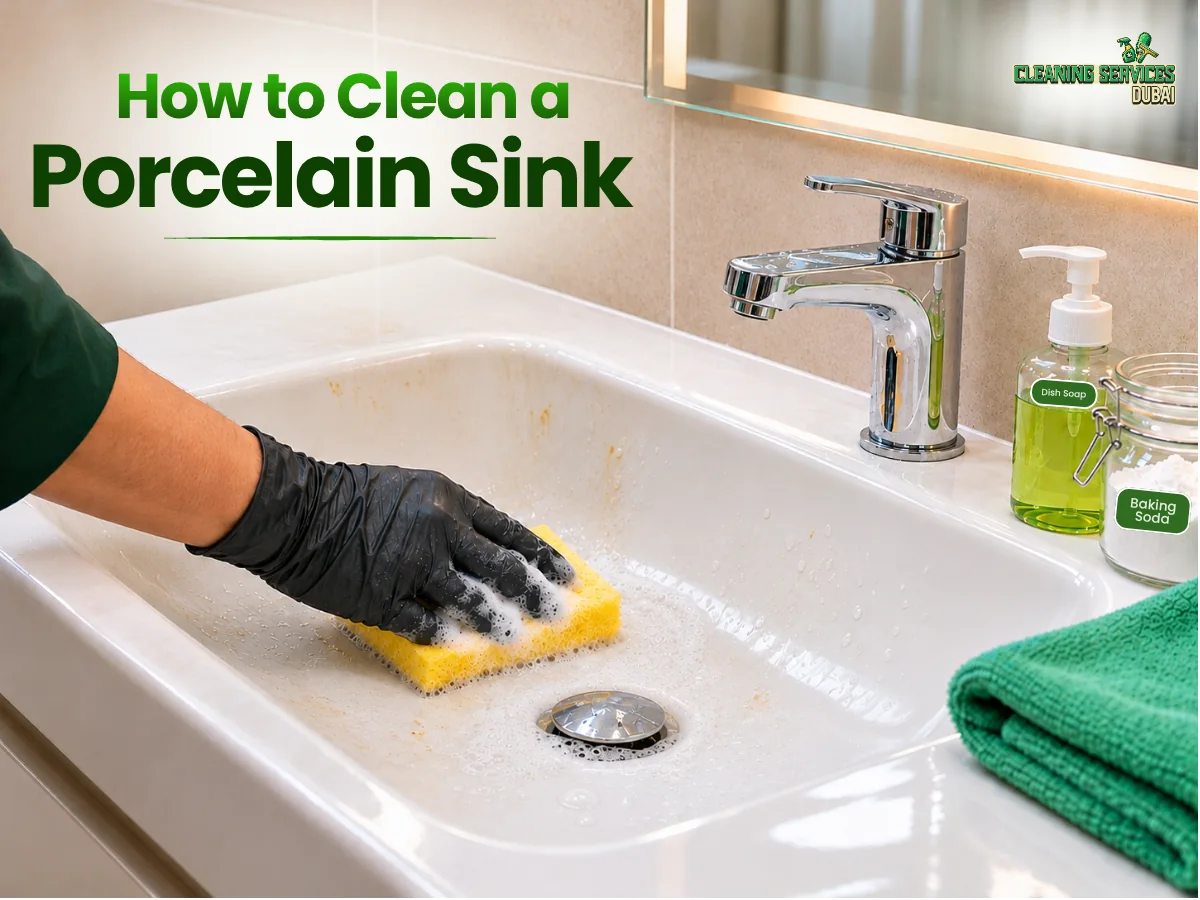
The best way to clean a porcelain sink without scratching it is to wash it with warm water, mild dish soap and a soft sponge, then rinse and dry it with a microfiber cloth. For stubborn stains, a gentle baking soda paste or a baking soda and hydrogen peroxide paste can lift marks without harsh scrubbing. Avoid steel wool, rough scouring pads and strong bleach, which can dull the glossy glaze.
Not every porcelain sink has the same finish, so test any stain treatment on a small hidden area first. This guide explains how to clean a porcelain sink safely, deal with common stains, protect the glossy finish and recognise when a mark needs professional attention.
At Cleaning Services Dubai, we understand that kitchen and bathroom surfaces need the right cleaning approach. When a stain will not shift, our professional cleaning service can help without damaging delicate finishes.
What You Need to Know Before Cleaning a Porcelain Sink
Before choosing a cleaner, identify the material and finish of your sink. Using the wrong chemical can dull the finish and make future stains harder to remove.
What Is the Difference Between Porcelain, Ceramic and Enamel?
- Porcelain: A dense ceramic material commonly used for bathroom basins and kitchen sinks. Its glazed surface is smooth and non-porous when intact.
- Ceramic: A broad material category that includes different types of clay-based products. A ceramic sink may have a different glaze and care requirements. If you want to know how to clean a ceramic sink, the same mild soap method in this guide is a safe place to start.
- Porcelain enamel: A glass-like coating applied to a base material, such as cast iron or steel. The coating gives the sink a smooth, glossy appearance. To clean an enamel sink, use the same gentle tools, because the coating can chip or wear if scrubbed hard.
How to Clean a Porcelain Sink Step by Step
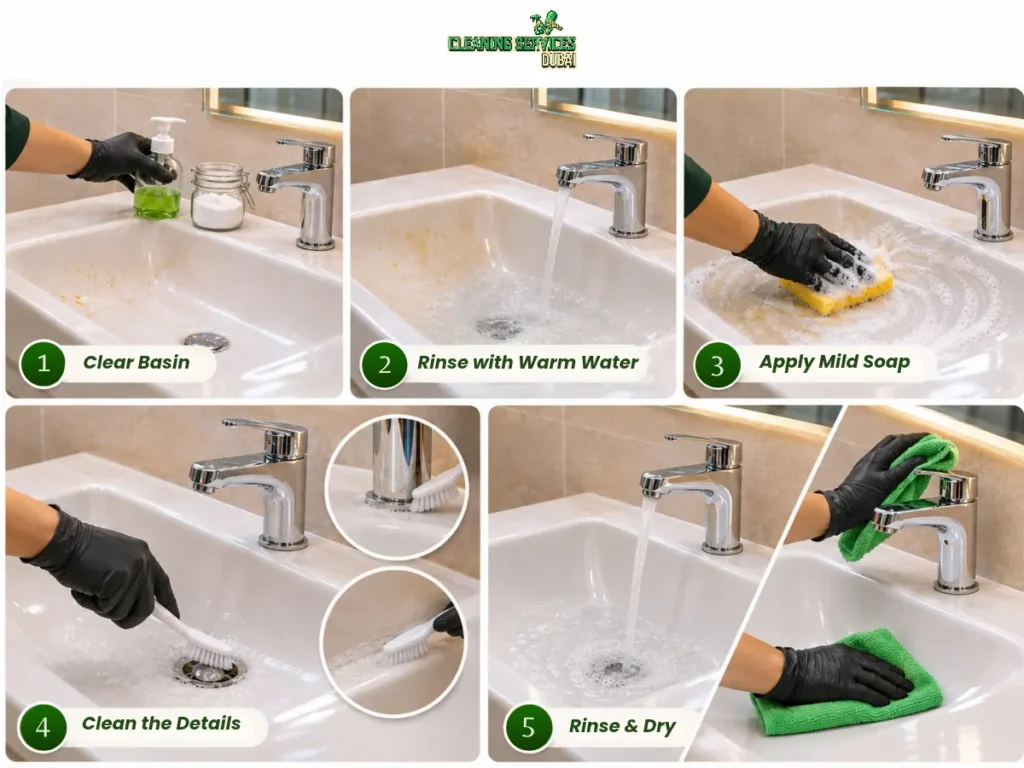
- Clear the basin: Remove dishes, soap dispensers, toiletries, drain stoppers and loose debris.
- Rinse with warm water: Run warm water around the basin to loosen food particles, toothpaste residue and loose dirt.
- Apply mild soap: Put a small amount of dish soap on a damp, soft sponge. Work around the basin using gentle circular movements.
- Clean the details: Pay attention to the drain, faucet base, handles and edges. Use a soft-bristle toothbrush for narrow areas where grime collects.
- Rinse and dry: Wash away all soap residue with clean water. Dry the basin and faucet with a microfiber cloth to reduce water spots.
What to Use to Clean a Porcelain Sink
You do not need a cupboard full of strong chemicals for regular porcelain sink cleaning. Start with simple household cleaning products and choose a stronger treatment only for a specific stain.
Baking Soda for Gentle Stain Removal
For a small mark:
- Wet the affected area.
- Sprinkle a little baking soda over the mark.
- Add a few drops of water to form a soft paste.
- Gently wipe with a damp, non-abrasive sponge.
- Rinse thoroughly and dry.
This is the simplest way to clean a sink with baking soda, but it is not suitable for every finish. Test a small hidden area first and stop if the surface becomes dull or shows signs of damage.
White Vinegar for Mineral Deposits
If your sink’s care guide permits it, dilute the vinegar with water, apply it to a small affected area for a short period, rinse thoroughly and dry. Do not leave it sitting on the surface.
Never use vinegar with bleach or a bleach-based cleaner. The combination can release dangerous chlorine gas.
Hydrogen Peroxide for Tough Stains
Hydrogen peroxide can help with stubborn organic discolouration, such as tea, coffee or old yellow marks.
- Mix baking soda with a little 3% hydrogen peroxide to form a paste.
- Spread it over the stained area.
- Leave it for a few minutes.
- Wipe gently with a non-abrasive sponge.
- Rinse thoroughly and dry.
Use this paste on its own, and rinse the sink properly before trying another method.
How to Remove Stains From a Porcelain Sink
Different stains need different treatments. Identifying the problem first helps you avoid using an unsuitable product.
How to Remove Yellow Stains From Porcelain Sink
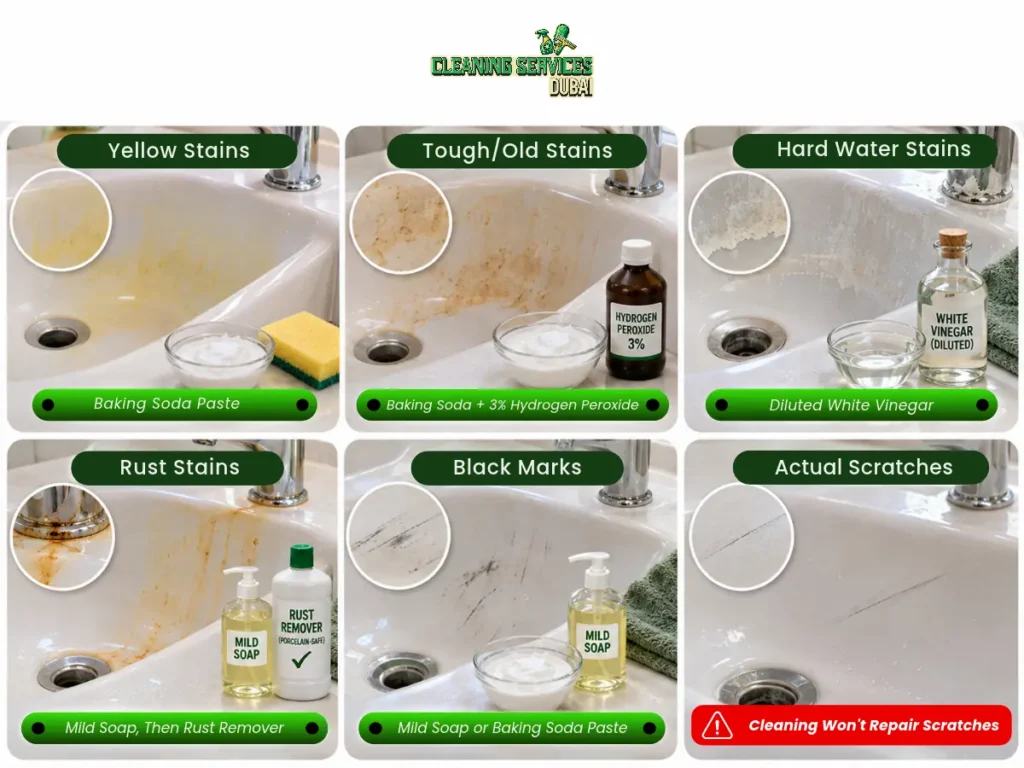
Yellow marks can develop because of soap residue, mineral deposits, ageing or a change in the surface finish. Start by washing the basin with mild dish soap and warm water.
If the marks remain, apply a soft baking soda paste and wipe gently. For older discolouration, try the baking soda and hydrogen peroxide paste described above. Do not assume that chlorine bleach is safe for every white porcelain sink. It can damage some finishes and should only be used if your sink’s care guide permits it.
How to Remove Hard Water Stains and Limescale
For cleaning hard water stains, start with a soft cloth and mild soap. If your sink tolerates diluted vinegar, test it on a small area first. Apply it briefly, rinse thoroughly and dry the surface.
When you want to remove hard water stains, the key is choosing a treatment that loosens mineral deposits without harming the glaze. A suitable hard water stain remover may be better for stubborn buildup than repeated scrubbing.
How to Remove Rust From a Porcelain Sink
First, remove the object that caused the mark. Wash the area with mild dish soap and water. If the rust remains, select a rust remover that specifically states it is suitable for your sink material. Use it on its own and rinse before applying anything else.
Avoid scraping rust with a knife, metal tool or steel wool. This can leave permanent marks on the porcelain surface.
How to Remove Black Marks and Metal Marks
Begin with mild soap and a soft sponge. If the mark remains, try a soft baking soda paste with light pressure, or a non-abrasive cleaner labelled safe for porcelain. Work gently and rinse the area completely.
How to Deal With Scratches on an Old Porcelain Sink
A quick check helps. Run your fingernail across the mark. If your nail glides over it, it is likely a surface stain. If your nail catches in a groove, the glaze may be damaged. Stop scrubbing and ask a sink repair or reglazing specialist about restoration.
How to Clean Kitchen and Bathroom Porcelain Sinks
If you are wondering how to clean a bathroom sink or how to clean a kitchen sink made of porcelain, the basics are the same, but the type of dirt and daily use can differ.
How to Clean a Porcelain Kitchen Sink
A kitchen sink often comes into contact with food scraps, cooking grease, tea, coffee and cookware. Remove leftover food first, then wash the basin with warm water and mild dish soap. Avoid leaving metal cans, wet cookware or rusty utensils in the basin because they can cause discolouration.
If you are cleaning the rest of the kitchen too, our guide on how to clean kitchen appliances naturally covers ovens, microwaves and other appliances.
How to Clean a Porcelain Bathroom Sink
Bathroom sinks commonly collect toothpaste residue, soap scum, hair and water spots.
Use mild dish soap or a suitable bathroom cleaner approved for the sink’s finish. Wipe around the faucet, handles and drain stopper with a soft cloth. Rinse thoroughly and dry the basin to reduce mineral deposits.
How to Keep a Porcelain Sink Clean and Shiny
Daily care
- Rinse away food, toothpaste and soap residue.
- Dry the basin after use where practical.
- Remove metal objects that may leave rust or transfer marks.
Weekly care
- Wash the full basin with mild dish soap.
- Clean around the faucet, handles and drain.
- Check for mineral deposits and early signs of discolouration.
How to Make a Porcelain Sink Shiny
A clean, dry surface usually looks brighter than one covered with soap residue or mineral deposits. Wash the basin with mild soap, rinse it thoroughly and buff it gently with a clean microfiber cloth.
How to Prevent Hard Water Stains
The easiest way to get rid of hard water stains for good is to stop them forming. Wiping the basin and faucet after use can reduce this buildup.
What Not to Use on a Porcelain Sink
Always read the product label and the sink manufacturer’s care instructions before using a chemical or abrasive cleaner.
Avoid steel wool, metal scrapers, rough scouring pads and stiff wire brushes. These can scratch the surface or damage the protective glaze.
We read the bathroom and kitchen reviews left for three Dubai cleaning companies on Google Maps. Three problems came up again and again:
1. Harsh chemicals that left white marks or a dull finish on fixtures, glass and appliances.
2. Basins skipped during a clean. One customer wrote, “Didn’t even clean the washbasin.”
3. Old, set-in stains that a regular clean could not remove.
Does Baking Soda Scratch Porcelain?
Baking soda is often used for gentle household cleaning, but it is still mildly abrasive. It may be suitable for some intact glazed surfaces when used with water and very light pressure.
Can You Use Bleach on a Porcelain Sink?
Bleach should not be your first choice for routine porcelain cleaning. Check the sink care instructions and the cleaner’s label before use. Most importantly, never mix bleach with vinegar, ammonia, toilet cleaner, rust remover or other household chemicals. Dangerous gases or reactions may result.
Cleaning Products You Should Never Mix
- Bleach and vinegar: Can release chlorine gas.
- Bleach and ammonia: Can produce dangerous chloramine gases.
- Hydrogen peroxide and vinegar: Do not combine them in the same container or apply them together.
- Baking soda and vinegar: They react and neutralise much of each other’s cleaning action. The fizz does not mean the mixture is a stronger cleaner.
Use one suitable product at a time. Rinse the sink thoroughly before changing products, and follow all label instructions.
When DIY Cleaning Isn’t Enough
Some stains are too old or deeply set for ordinary household cleaning.
If the sink is part of a larger bathroom clean, explore our bathroom deep cleaning Dubai service. For grease, food residue and buildup around the kitchen, see our kitchen cleaning services Dubai page.
Frequently Asked Questions
Can You Pour Boiling Water Into a Porcelain Sink?
It is better to avoid pouring boiling water directly into a cold porcelain sink. Sudden temperature changes can put stress on the sink and may contribute to cracking, especially if it is older or already damaged. Use warm water for routine cleaning.
Is a Melamine Sponge Safe on Porcelain?
A melamine sponge works like a fine abrasive and may dull or damage some finishes. Test an inconspicuous area first. A soft microfiber cloth is a safer option for regular cleaning.
Is a Porcelain Sink Easy to Stain?
A porcelain sink with an intact glaze resists most stains because its surface is smooth and non-porous. Stains tend to set faster once the glaze is chipped, scratched or worn. Protecting the finish with gentle cleaning is the best way to keep it stain-resistant.
Keep Your Kitchen and Bathroom Surfaces in Better Condition
A porcelain sink does not need harsh chemicals or heavy scrubbing to stay clean. Start with mild soap, warm water and a soft sponge, treat stubborn marks with a gentle paste, and dry the basin after use to keep the glaze bright.
Last updated: November 2026
