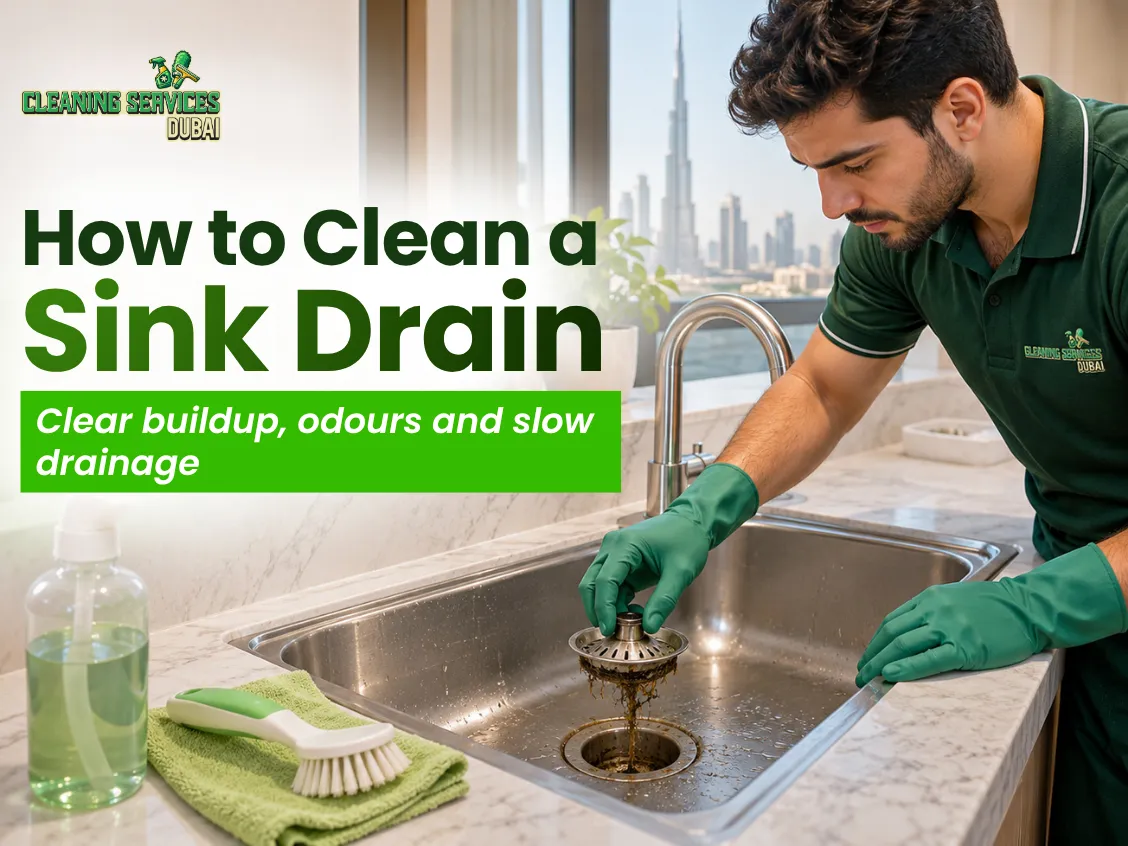
To clean a sink drain, remove hair and food from the opening, take out and scrub the stopper, then pour in half a cup of baking soda followed by white vinegar. Wait about 15 minutes and flush with hot (not boiling) water. If the water still drains slowly, the P-trap may need cleaning.
A dirty sink drain causes slow water flow, unpleasant smells and stubborn buildup around the stopper. This guide shows how to clean a sink drain in the bathroom and kitchen, how to clean out the P-trap and what never to pour down the drain.
How Do You Clean a Sink Drain Step by Step?
You do not always need strong chemicals or special equipment to clean a sink drain. This basic process works well for routine maintenance and light residue.
What you need:
- Rubber gloves
- Microfibre cloth or cleaning sponge
- Small cleaning brush
- Bucket or plastic container
- Baking soda
- White vinegar
- Hot tap water
- Plastic drain zip tool, if hair is trapped near the opening
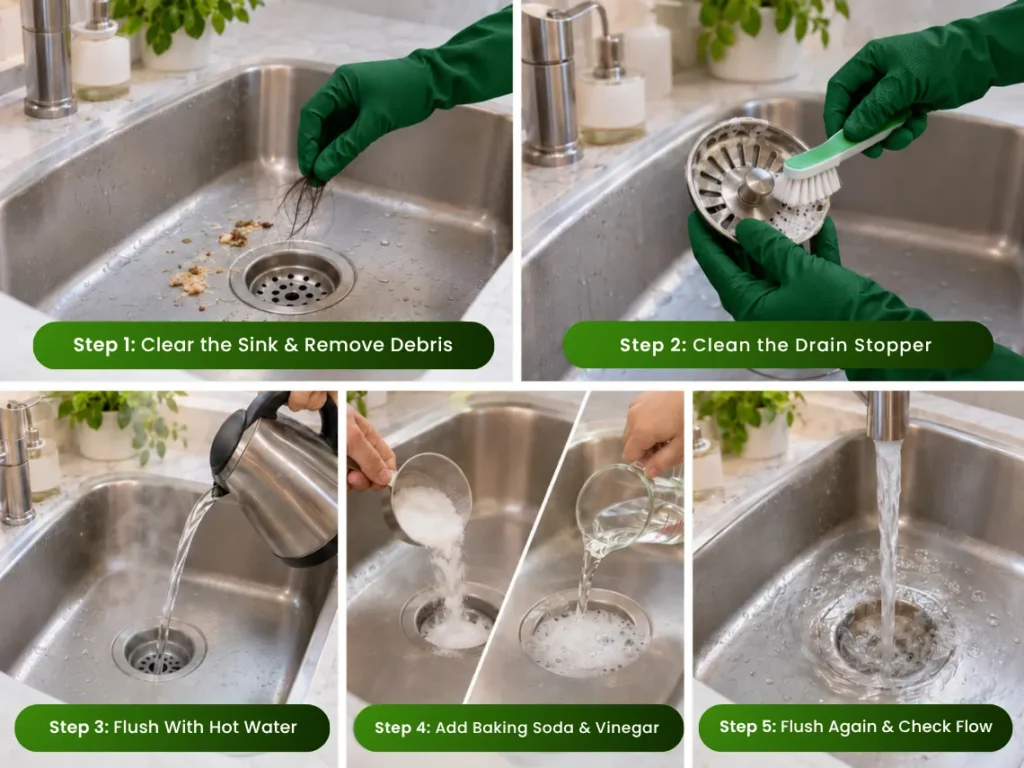
Step 1: Clear the Sink and Remove Visible Debris
Remove dishes, toiletries and anything sitting inside the sink. Pick out visible food particles, hair and other debris around the drain opening. Use gloves rather than pushing your fingers deep into the pipe.
In a kitchen sink, empty the food scraps from the strainer. In a bathroom basin, check for hair, soap residue and toothpaste buildup.
Step 2: Take Out and Clean the Drain Stopper
The drain stopper collects hair, skin oils, soap scum and other debris. This buildup can cause a bad smell even when water still drains normally.
Lift out the stopper if your sink allows it. Some stoppers pull out directly, while others have a small connecting rod underneath the basin. Remove the trapped dirt and scrub the stopper with a brush and mild dish soap. Clean around the drain opening as well.
If the stopper is fixed or difficult to remove, do not force it. Check the manufacturer’s instructions or ask a plumber.
Step 3: Flush With Hot (Not Boiling) Water
Run hot tap water through the drain for a minute to loosen light soap residue and oily deposits. Avoid pouring a kettle of boiling water straight into the sink, especially if you do not know the pipe material (see below).
Step 4: Add Baking Soda, Then Vinegar
Add about half a cup of baking soda to the drain, followed by a similar amount of white vinegar. Let the mixture fizz for about 15 minutes.
This helps loosen light surface residue and freshen the drain, but it is not a solution for a solid blockage, thick grease or a pipe full of hair. Do not use it if a commercial drain cleaner is already in the pipe.
Step 5: Flush Again and Check the Water Flow
Rinse the drain with hot tap water and watch how quickly the water leaves the sink.
If it drains normally and the smell has gone, the basic cleaning is enough. If water still collects, gurgles or drains very slowly, there may be a deeper blockage in the P-trap or drain line that needs professional drain cleaning.
Why Does a Sink Drain Get Dirty, Slow or Smelly?
A sink drain collects more than water. Hair, soap residue, toothpaste, makeup, food particles, grease and skin oils stick to the drain opening and inner pipe walls. Over time, this buildup restricts water flow and produces unpleasant odours.
Bathroom drains mostly collect hair and soap scum, while kitchen drains are more likely to build up grease and food residue. A dirty stopper, an unclean overflow opening or a dry P-trap can also cause a bad smell.
Signs Your Sink Drain Needs Cleaning
- Slow water drainage: Water takes longer than usual to leave the basin.
- Unpleasant odours: A musty, sour or sewage-like smell comes from the drain.
- Gurgling sounds: You hear bubbling after water runs.
- Visible debris: Hair, dark residue or food particles collect around the drain opening.
How Do You Clean a Bathroom Sink Drain?
Below, Cleaning Services Dubai shares simple ways to clean a bathroom sink drain, easy habits that stop the basin from clogging and the mistakes to avoid when cleaning bathroom sinks and drains. Follow these tips and the grey, slimy film around the plughole is far less likely to come back.
Bathroom sink drains usually collect hair, soap residue, toothpaste, makeup and skin oils. Start by removing visible hair and cleaning the stopper (Steps 1–2 above), then check the overflow hole. If you also want to clean the basin itself without scratching it, see this guide on how to clean a porcelain sink.
Remove Hair From the Wash Basin Drain
Hair is one of the most common causes of a slow wash basin drain. It catches around the stopper and combines with soap residue to form a dense blockage.
Use a plastic drain zip tool to pull out hair close to the opening. Insert it gently and pull it out slowly, so you do not push the blockage further into the pipe. If the hair is trapped deeper or the tool cannot pass through, stop rather than forcing it.
Clean the Sink Overflow Hole
The overflow hole is the small opening near the top of many bathroom basins. Its inner passage collects soap residue and grime, and it is a common hidden source of smell.
- Wipe around the opening with a damp cloth.
- Use a small, soft brush to remove accessible dirt.
- Rinse gently with a little warm water.
- Wipe the surrounding surface dry.
Do not push a large brush or sharp object deep into the overflow passage.
Deal With Hard Water Scale Around the Basin Drain
Dubai’s hard water leaves white mineral scale on taps, basins and drain fittings. Clean visible deposits with a product made for the surface material and follow its label. Avoid acidic cleaners on fittings unless the manufacturer says they are safe.
Scale is rarely the main cause of a slow bathroom drain, though. Hair and soap scum usually are, so check those first.
How Do You Clean a Kitchen Sink Drain?
Kitchen sink drains deal with food particles, cooking oil, grease and dishwashing residue. These collect around the strainer and inside the drain pipe and slowly restrict water flow. If your kitchen has a garbage disposal, follow its manufacturer’s cleaning instructions instead of putting your hand inside.
Clear Grease and Food Buildup
Grease sticks to the inner walls of the drain pipe, and food particles get trapped in it.
- Remove food scraps from the sink strainer after washing dishes.
- Wipe excess cooking oil from pans before washing them.
- Clean the strainer and drain opening with dish soap.
- Never pour cooking oil, fats or leftover grease into the sink. They cool and harden inside the pipe.
If water backs up or the same blockage keeps returning, a surface clean will not solve it. The P-trap or a deeper section of the drain line needs attention.
Why Does It Smell Under the Kitchen Sink?
A smell under the kitchen sink may come from more than the drain opening. Open the cabinet and check:
- The pipe connections and the P-trap for leaks or residue
- The underside of the sink
- Damp spots, stains or signs of mould
- The waste bin and nearby stored items
If you see water leaking from a joint, do not tighten fittings blindly. A damaged or badly fitted connection needs proper inspection.
How Do You Clean the P-Trap Under Your Sink?
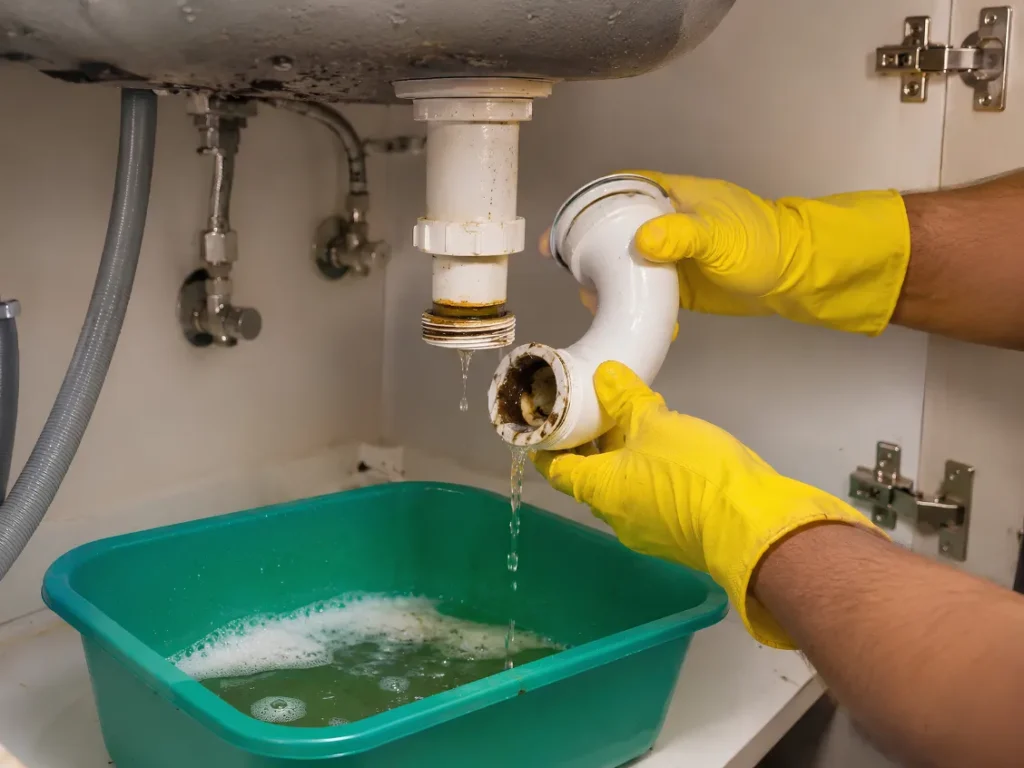
A P-trap is the curved section of pipe underneath a sink. Its shape holds a small amount of water, creating a seal that stops sewer gases from entering the room. Hair, soap, food particles and grease collect inside it, which causes slow drainage and smells. When basic cleaning fails, this is usually the place to clean out the drain properly.
Remove, Clean and Refit a P-Trap
Only attempt this if the trap is easy to reach and you are comfortable working with the fittings.
- Place a bucket directly underneath the P-trap.
- Wear gloves and protect the cabinet floor.
- Check how the trap is connected before loosening anything.
- Loosen the slip nuts by hand if the fittings are designed to be removed.
- Lower the trap and empty the water and debris into the bucket.
- Clean the inside with a brush and rinse it.
- Check the washers and seals for wear.
- Refit the trap in its original position and hand-tighten the connections.
Do not force corroded, brittle or stuck fittings. If the pipe is glued, damaged or hard to reach, leave it to a plumber.
Check for Leaks After Refitting
A P-trap that looks fitted can still leak from a loose connection or a damaged washer.
- Dry the pipe and connections with a cloth.
- Run water into the sink, then fill it slightly and release it.
- Check every joint for drips and look for water in the bucket.
If you notice a leak, stop using the sink and correct the fitting first. A poorly secured connection can cause water damage inside the cabinet.
What Dubai residents say in drain service reviews
Public Google reviews of drain cleaning and plumbing companies in Dubai show where DIY drain cleaning goes wrong. Three problems stood out:
- Home remedies stop working on grease. Several people tried plunging, hot water and shop-bought drain cleaners on a blocked kitchen sink before calling for help. In those cases the problem was deeper in the pipe, which is why the P-trap check above matters.
- Acid makes things worse. One reviewer described acid being poured into a drain: strong fumes, drain covers stained for good and drops on the kitchen cabinets. This is why acid and caustic cleaners are best avoided.
- The smell or leak comes back. Some reviewers paid for a quick fix, but the smell returned because its real source was never found, or a refitted pipe was left loose and leaked later. Always find the source of the smell and check every joint after refitting.
How Do You Get Rid of a Bad Smell From a Sink Drain?
A smelly sink drain does not always need a stronger cleaning product. The odour may come from a dirty stopper, an unclean overflow hole, a dry trap or a plumbing issue. Clean the stopper and overflow first (see above), then check these two causes.
Check for a Dry Trap
The P-trap needs water inside its curve to block sewer gases. In a sink that has not been used for a while, for example in a guest bathroom or after a long holiday, that water can evaporate.
Run water into the drain for a minute to restore the seal. If the sewage smell disappears, a dry trap was the cause. If it comes back quickly, there may be a leak or a trap problem.
Check for a Sewer or Vent Problem
A persistent sewage-like smell often points to a plumbing issue rather than ordinary drain buildup. Watch for these signs:
- The smell comes back soon after cleaning.
- Several sinks or drains smell at the same time.
- You hear repeated gurgling from different fixtures.
- The smell is strong even when the sink is not being used.
Do not cover a sewer smell with fragrance or stronger chemicals. Arrange a plumbing inspection to find the source.
Does Baking Soda and Vinegar Really Clean a Drain?
Baking soda and vinegar can freshen a sink drain and loosen light surface residue. The fizzing reaction helps move loose dirt around the drain opening.
However, this homemade drain cleaner cannot reliably clear a dense mass of hair, a solid grease blockage or a clog deep inside the pipe. For those, remove visible debris, clean the stopper and use a drain tool for hair. Think of baking soda and vinegar as an occasional freshening method, not a replacement for proper blockage removal.
What Should You Never Pour Down a Sink Drain?
Some cleaning methods create more problems than the original blockage. Do not pour cooking oil, grease, paint, solvents or leftover chemicals into the sink.
Avoid Acid and Caustic Drain Cleaners
Acid-based and caustic drain cleaners can cause chemical burns, release dangerous fumes and stain sink finishes, drain covers and nearby cabinets. They can also damage some pipes, seals and metals.
Never mix cleaning products, including vinegar, bleach and commercial drain cleaners. If you have already used a chemical product, do not add anything else and do not open the trap while it may still be inside. If the drain stays blocked, tell the plumber exactly what was used.
Can Boiling Water Damage PVC Pipes?
Yes, it can. Many sink drains use PVC pipes, and Vinidex, a pipe manufacturer, gives a recommended maximum continuous operating temperature of 60°C for PVC-U drainage pipes. A kettle of boiling water is well above that and can weaken joints over time.
Use hot tap water for routine flushing unless you know the pipe material can handle more.
How Often Should You Clean a Sink Drain to Prevent Clogs?
Regular maintenance stops hair, food, grease and soap from building up. The right frequency depends on how often the sink is used.
| Cleaning task | Suggested frequency |
|---|---|
| Remove visible food and hair | After use |
| Clean the drain strainer and stopper | Weekly |
| Wipe around the drain opening | Weekly |
| Baking soda and vinegar freshen | Every 2–4 weeks |
| Clean the overflow hole | Monthly |
| Check under the sink for leaks or smells | When symptoms appear |
Simple ways to prevent drain blockages:
- Fit a strainer in the kitchen sink and a hair catcher in bathroom basins.
- Wipe cooking grease from pans before washing them.
- Remove hair and soap residue from the stopper regularly.
- Act on slow drainage before it becomes a full blockage.
When Should You Call a Drain Cleaning Service in Dubai?
Some problems cannot be fixed by cleaning the stopper or flushing the sink. The issue may sit in a deeper pipe section, a shared drainage line or another part of the building’s plumbing.
Signs of a Deeper Drain Problem
- Several drains are slow: More than one sink, shower or floor drain is affected.
- Water backs up: Water returns through the drain after another fixture is used.
- Persistent sewage smell: The odour returns after cleaning and refilling the trap.
- Leaks under the sink: Water appears around the P-trap or pipe joints.
- Recurring blockages: The same sink becomes blocked again soon after clearing.
In some Dubai buildings, drainage layouts vary. Do not assume an AC drip tray is connected to the kitchen sink drain. If a drip tray overflows or water appears near a sink cabinet, have the building’s drainage layout checked.
FAQs – How to Clean a Sink Drain
Can You Leave Vinegar in a Drain Overnight?
It is generally unnecessary. Around 15 minutes is enough for light surface residue, and leaving vinegar longer does not guarantee a better result.
Can You Use Hydrogen Peroxide to Clean a Sink Drain?
Hydrogen peroxide can help with some surface cleaning, but it will not remove a deep hair or grease blockage, so it is not a reliable drain unblocker.
Can You Clean a Sink Drain Without Removing the Stopper?
Yes. You can clean the visible opening and use a plastic drain zip tool to pull out hair around the stopper. Buildup underneath the stopper still needs it removed for a thorough clean.
Why Is My Sink Draining Slowly but Not Fully Clogged?
A partial blockage from hair, soap residue, grease or a dirty stopper is the usual cause. A ventilation problem can also slow water flow. Clean the accessible parts first, then arrange an inspection if it continues.
Is Bleach Safe for Cleaning a Sink Drain?
Bleach is not a good drain cleaner. It does not remove hair or grease blockages and can produce dangerous fumes when it meets other products such as vinegar, acid cleaners or ammonia.
How Do You Get Rid of Fruit Flies in a Sink Drain?
Fruit flies breed in organic residue around damp drains. Scrub the stopper and drain opening, remove food waste, wipe the sink dry and keep the bin clean. If they keep coming back, look for hidden food debris in the trap or under the sink.
What Do Plumbers Recommend to Clean Drains?
Most plumbers recommend physical removal first: clean the stopper, pull out hair and clean the P-trap. Strong chemicals are a last resort, if used at all.
Last updated: November 2026.
Results depend on your sink, pipe material and the type of blockage. Follow product labels and stop if a fitting will not move easily.
