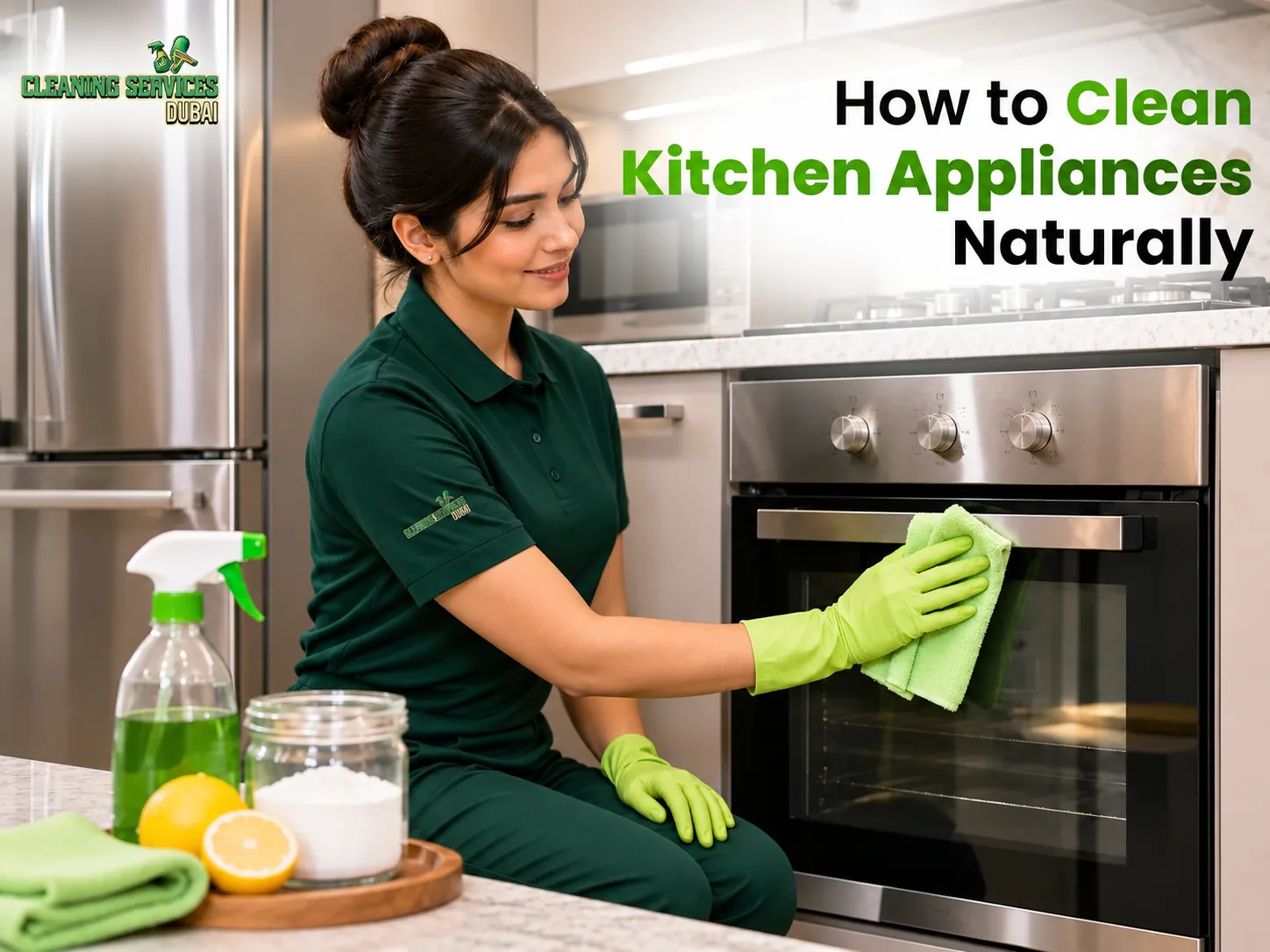
The best way to clean kitchen appliances naturally is to use baking soda for stubborn grease, mild dish soap for everyday cleaning, and diluted vinegar or lemon where the appliance manufacturer allows it. These simple ingredients can remove food residue, freshen surfaces and reduce everyday grime without relying on strong cleaning products. Always unplug electrical appliances before cleaning and let hot parts cool down.
In Dubai homes, cooking grease can build up around ovens, stovetops and kitchen hood filters. Food spills can also attract cockroaches, while unsuitable chemical sprays may leave marks or damage delicate finishes. This guide shows you how to clean kitchen appliances naturally, one appliance at a time, so they stay in better condition and your kitchen stays ready for daily use.
Reviewed by Rashid Abbas, Operations Manager at Cleaning Services Dubai, with 18 years of cleaning industry experience. This covers common kitchen cleaning challenges, including built-up cooking grease, food residue, stubborn stains and appliance odours. Each recommended method should be checked against the appliance manufacturer’s care instructions to protect its surfaces, finishes and electrical components.
Last updated: November 2026
Why Clean Kitchen Appliances Naturally?
Kitchen appliances come into contact with food, water, grease and heat every day. Over time, these conditions leave stubborn stains, unpleasant odours and food particles on both interior and exterior surfaces. Regular cleaning keeps these problems under control and supports better kitchen hygiene.
Natural ingredients can be useful for everyday maintenance. Baking soda helps loosen greasy residue, mild dish soap removes common food marks, and diluted vinegar can tackle mineral deposits when the surface allows it. They are also a practical choice if you prefer non-toxic cleaning products around food.
There is another important reason to choose the right cleaner: appliance finishes need proper care. Strong sprays and abrasive scrubbers can damage stainless steel, plastic, non-stick coatings and rubber seals. A gentle cleaning method protects these surfaces while removing dirt.
What Can You Clean Kitchen Appliances With Naturally?
You do not need a cupboard full of products to handle everyday appliance cleaning. A few basic ingredients and soft cleaning tools can manage many common tasks. The important part is matching each cleaner to the surface.
| Natural cleaner | Best for | Important precaution |
|---|---|---|
| Baking soda and water | Oven walls, oven racks, burnt trays, stove grates and air fryer baskets | Test first; avoid delicate and easily scratched finishes |
| Diluted white vinegar | Kettle limescale, microwave odours and glass surfaces | Avoid natural stone and surfaces restricted by the manufacturer |
| Lemon juice or citric acid | Microwave steam cleaning, light odours and kettle scale | Keep away from sensitive finishes and electrical components |
| Mild dish soap and warm water | Everyday grease, fridge shelves and appliance exteriors | Wipe away soap and dry the surface |
| Microfiber cloth | Dust, fingerprints and stainless steel surfaces | Use a clean cloth to avoid spreading grease |
A homemade kitchen cleaner should be simple and suited to the job. Do not mix several ingredients just because they are natural. For more information about suitable products, see our guide to natural cleaning products.
How to Clean Kitchen Appliances Naturally: Step-by-Step
Different appliances collect different types of dirt. A microwave gets food splashes, an oven collects burnt grease, and a kettle develops limescale. Using the correct method for each appliance gives you a better result and reduces the risk of damage.
Before you start: unplug the appliance, let it cool, and check the manual for anything it says not to use.
1. How to Clean a Microwave Naturally
Microwave interiors often collect dried food, sauce splashes and unpleasant smells. Lemon steam is an easy way to clean the inside of a microwave because it loosens light residue and makes the interior easier to wipe.
- Fill a microwave-safe bowl with water and add a few lemon slices. No lemon? Add two spoons of white vinegar to the water instead.
- Heat it for a few minutes until steam forms. Do not let the bowl boil dry.
- Leave the door closed briefly so the steam can soften the food splashes.
- Carefully remove the hot bowl, then wipe the interior with a soft microfiber cloth.
- Wash the turntable separately with warm water and mild dish soap, then dry it before replacing it.
This method also helps with a smelly microwave. For stubborn marks, repeat the process rather than scraping the microwave interior with a sharp or abrasive tool.
2. How to Clean an Oven with Baking Soda
Ovens collect burnt food, cooking oil and grease around the walls, door and racks. For most home ovens, a baking soda paste is one of the best home remedies to clean an oven because it loosens residue without aggressive scrubbing.
- Switch off the oven, unplug it where applicable and allow it to cool completely.
- Mix baking soda with a small amount of water to make a spreadable paste.
- Apply a thin layer to greasy areas, keeping it away from heating elements, fans and vents.
- Leave it for several hours so it can soften the grease.
- Remove the paste with a damp cloth. Soak removable racks and burnt oven trays in warm water and dish soap, then scrub them with a non-abrasive sponge.
Avoid applying homemade cleaners to catalytic liners, self-cleaning surfaces or special oven coatings unless the manufacturer permits it. Never force residue off with metal tools.
If burnt grease and carbon have collected over a long period, home cleaning may not be enough. Our professional oven cleaning in Dubai page explains the specialist service available for heavier oven cleaning.
3. How to Clean Your Fridge Naturally
A refrigerator needs regular attention because food spills, liquid leaks and forgotten items can create unpleasant smells. Cleaning the shelves and door seals also makes it easier to spot spoiled food.
- Remove the food and check expiry dates before cleaning.
- Take out removable shelves and drawers. Allow cold glass shelves to reach room temperature before washing them to reduce the risk of thermal shock.
- Clean the inside of the fridge with warm water and a little baking soda. Use mild dish soap for sticky spills.
- Use a soft cloth around the door seal, corners and shelf supports where food residue collects.
- Wipe with clean water, dry everything properly and return the shelves and food.
Avoid strong sprays around stored food, as their smell can linger. Food particles left inside appliances can attract cockroaches, so clean spills as soon as you notice them. If you can safely reach them, gently dust the condenser coils at the back of the fridge.
To get rid of fridge smell between cleans, leave an open bowl of baking soda on a shelf. If your fridge smells bad even after cleaning, check for spoiled food, blocked drainage or residue in areas that are difficult to reach. Persistent odours may need further inspection.
4. How to Clean and Descale a Kettle
Limescale can collect inside a kettle, particularly when water leaves visible white scale. Descaling helps remove this buildup and keeps the inside of the kettle clean.
- Switch off and unplug the kettle.
- Check the manual to confirm that vinegar or lemon is allowed for your model.
- Fill the kettle halfway with equal parts white vinegar and water. To clean a kettle with lemon instead, use water with lemon juice or a little citric acid.
- Leave it for about an hour, then empty the kettle and rinse it thoroughly.
- Boil fresh water and discard it before using the kettle again.
Do not scrub the heating element with a hard brush. If the kettle has a removable filter, rinse it to clean limescale from that part as well.
5. How to Clean an Air Fryer Safely
Air fryers collect oil, crumbs and burnt food around the basket and tray. Cleaning these parts after use prevents old grease from building up.
- Switch off and unplug the air fryer. Let it cool completely.
- Remove the basket and tray.
- Wash removable parts with warm water and mild dish soap.
- For sticky grease, spread a thin baking soda paste on the basket, then loosen it with a soft sponge. Do this only if the coating allows it.
- Wipe the accessible interior with a lightly damp cloth and dry it fully.
When cleaning an air fryer, never pour water into its main electrical body. Keep moisture away from the heating element, fan and electrical components. Avoid metal scrubbers because they can damage the non-stick coating.
6. How to Clean a Stove and Kitchen Hood Filter
Stovetops and extractor fans collect cooking oil, food splashes and airborne grease. A regular wipe of the stove top prevents light residue from turning into a difficult cleaning job.
- Turn off the stove and allow the burners and cooking surface to cool.
- Remove the burner caps and pan supports.
- Soak gas stove burners and pan supports in warm soapy water. Use a soft brush or old toothbrush for the burner heads, and a baking soda paste for stubborn spots.
- Wipe the hob with a method suited to its material, whether glass, ceramic or a stainless steel hob.
- If the hood filter is metal and washable, soak it for 10 to 15 minutes in hot water with a tablespoon of dish soap and half a cup of baking soda. Scrub it gently with a soft brush and let it dry completely before refitting.
Grease filters need regular attention because accumulated oil can affect ventilation and become harder to remove. Do not soak a filter if its material or care instructions do not allow it.
7. How to Clean a Dishwasher Filter and Seals
A dishwasher can still collect food debris even when it runs regularly. The filter, door seals and accessible edges deserve attention because trapped residue can contribute to unpleasant smells.
- Switch off the dishwasher and check the manual for the correct filter removal method.
- Remove the filter carefully and rinse away loose food particles.
- Use a soft brush and warm water to clean the removable filter parts.
- Wipe the door seals and accessible edges with a damp microfiber cloth.
- Refit the filter correctly and use a dishwasher cleaning cycle or product approved by the manufacturer.
Many guides explain how to clean a dishwasher naturally with vinegar and baking soda. Avoid adding vinegar, lemon juice or baking soda to the machine unless the manufacturer specifically recommends it, because cleaning advice differs on these homemade treatments.
8. How to Clean Small Kitchen Appliances
Blenders, coffee makers and toasters have different cleaning requirements. Their removable parts may be washable, but electrical bases and heating components must stay dry.
Blender: Add warm water and a little dish soap to the jar. Secure the lid, run the blender briefly, empty it and rinse the jar. Wash removable parts separately. Never submerge the motor base.
Coffee maker: Empty the water reservoir and remove washable parts. Clean them with mild dish soap. Cleaning a coffee maker with vinegar works only on models whose manual allows it; otherwise, use the recommended descaling product.
Toaster: Unplug it and allow it to cool. Remove and empty the crumb tray, then use a soft brush to clear loose crumbs from accessible areas. Never insert metal objects, pour water inside or immerse the toaster.
How to Clean Stainless Steel Appliances Naturally
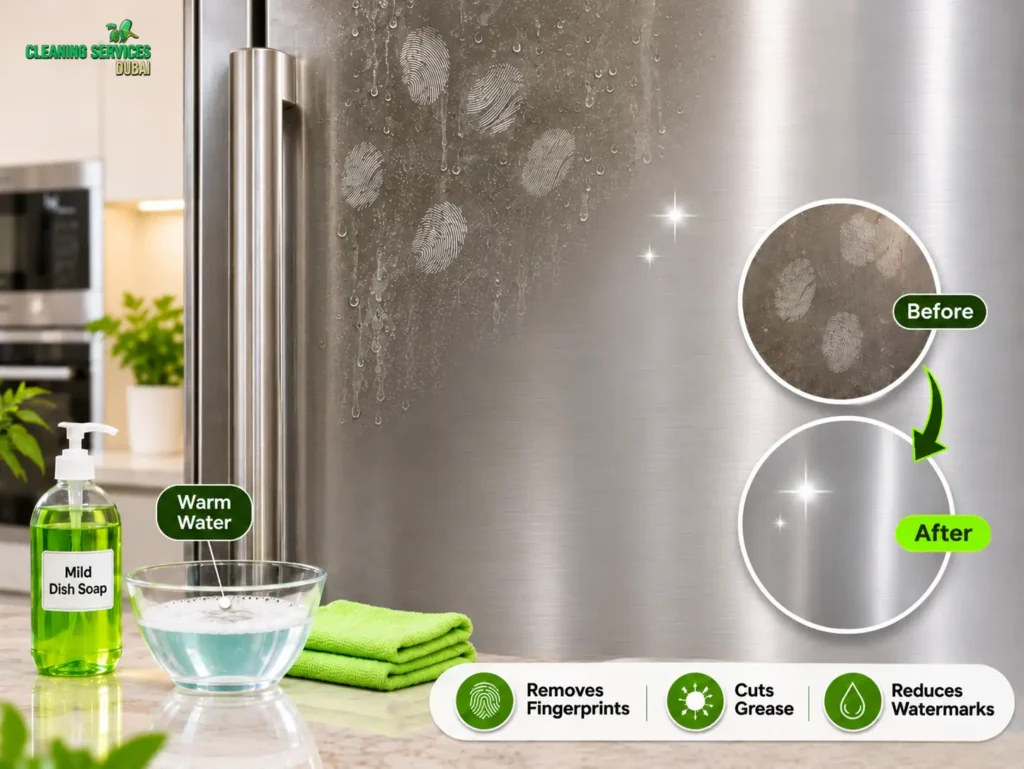
Stainless steel refrigerators, ovens and dishwashers can show fingerprints, watermarks and grease very easily. The best starting point for how to clean stainless steel appliances is usually warm water, mild dish soap and a clean microfiber cloth.
Removing Fingerprints, Grease and Watermarks
- Add a small amount of mild dish soap to warm water.
- Dampen a microfiber cloth and wipe the surface in the direction of the steel grain.
- Use a clean damp cloth to remove soap residue.
- Dry the surface with a soft towel to reduce watermarks and streaks.
Home Remedy to Clean Stainless Steel
A simple home remedy is mild dish soap mixed with warm water. It removes many everyday marks without requiring a strong cleaner. For cleaning stainless steel appliances, avoid steel wool, abrasive powders and rough scouring pads.
Some stainless steel appliances have fingerprint-resistant or specialist finishes. These may need a specific cleaning product, and certain sprays or polishes can damage their coating. Check the manufacturer’s instructions before using vinegar, lemon or olive oil.
What Kitchen Appliance Cleaning Mistakes Should You Avoid?
A natural ingredient is not automatically safe for every appliance. Using the wrong solution can damage a finish, affect a seal or leave moisture near an electrical part.
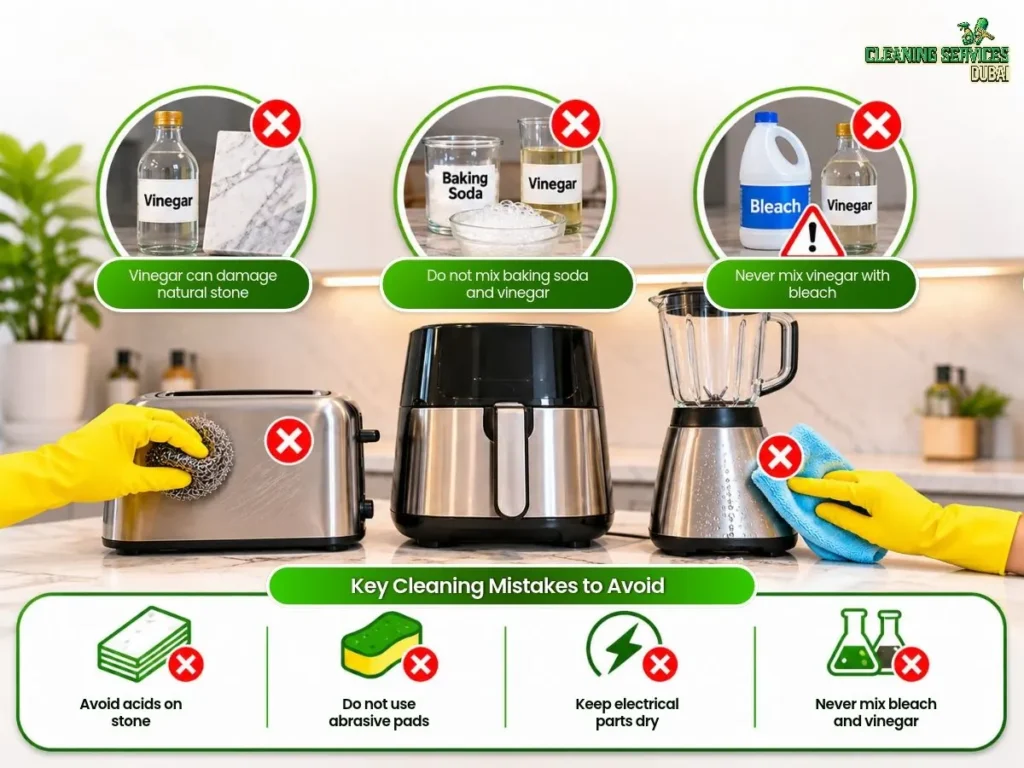
Myth: Vinegar is safe on every surface.
Fact: Vinegar can damage natural stone and may be unsuitable for certain coatings, seals and appliance parts. Check the manual first.
Myth: Baking soda and vinegar work better when mixed.
Fact: They react with each other and reduce each other’s cleaning action. Use each cleaner on its own instead.
Never mix vinegar with bleach. This combination can release dangerous chlorine gas. Keep cleaning products separate and follow their safety labels.
Never put an electrical appliance in water. Keep motor bases, plugs, heating components and electrical connections dry.
What Not to Use Where
| Avoid | On these surfaces or parts | Why |
|---|---|---|
| Vinegar or lemon | Granite, marble, natural stone and some rubber seals | Acid can etch stone and weaken seals over time |
| Baking soda scrubbing | Non-stick coatings, glossy plastics and fingerprint-resistant stainless steel | Its mild grit can scratch or dull the finish |
| Steel wool and rough scouring pads | Stainless steel, enamel and air fryer baskets | They leave scratches where grease collects |
| Water or liquid cleaners | Motor bases, the air fryer’s main body, toaster interiors and plugs | Moisture can damage electrical parts |
| Bleach | Stainless steel, and never together with vinegar | It can discolour steel, and the mix releases toxic gas |
Some guides recommend vinegar for dishwasher cleaning, while others advise against homemade acidic treatments. Air fryer cleaning advice also varies, particularly around adding water to the appliance. These methods should not be treated as universal instructions.
The conservative approach is to avoid putting vinegar or water inside an appliance unless its manufacturer specifically allows it. Clean removable parts separately and use approved machine-cleaning products for internal maintenance.
How Often Should You Clean Kitchen Appliances?
A regular schedule makes it easier to keep on top of how to clean kitchen appliances without a big weekend job. The frequency depends on how often you cook, the type of appliance and its care instructions.
| Frequency | Cleaning tasks |
|---|---|
| After use | Wipe microwave splashes, stovetop spills and air fryer basket residue |
| Weekly | Check fridge shelves, clean visible food spills and empty the toaster crumb tray |
| Monthly or as needed | Inspect hood and dishwasher filters, clean oven residue and check kettle scale |
| As recommended by the manufacturer | Descale appliances, clean internal components and replace or maintain filters |
Busy kitchens may need more frequent attention. Clean visible spills straight away, and do not wait for grease or food residue to become difficult to remove.
5-Minute Daily Kitchen Appliance Routine
- Once the hob has cooled, wipe it with warm soapy water.
- Wipe fresh splashes inside the microwave with a damp microfiber cloth.
- Empty the air fryer basket and wash it while the grease is still soft.
- Wipe fridge handles and any drips on the shelves or door.
- Remove fingerprints from stainless steel doors with a dry microfiber cloth.
When Is DIY Cleaning Not Enough?
Knowing how to clean kitchen appliances naturally handles most everyday marks, light grease and routine maintenance. However, years of burnt carbon inside an oven, thick grease on a kitchen hood or dirt in difficult-to-reach areas may require specialist equipment and a more detailed cleaning process.
Cleaning Services Dubai provides professional support for households that need more intensive care. Explore our kitchen deep cleaning in Dubai service when regular cleaning is no longer enough to manage built-up kitchen grime.
Frequently Asked Questions
Do natural cleaners kill germs on kitchen appliances?
Not all natural cleaning ingredients disinfect surfaces. Baking soda and lemon can help with certain cleaning tasks, but they should not be treated as approved disinfectants. Use a product labelled for disinfection when that level of hygiene is required.
Can you clean kitchen appliances with bleach?
Only use bleach if the appliance manufacturer specifically permits it and the product label gives suitable instructions. Chlorine bleach can discolour or damage stainless steel, and it must be rinsed well from surfaces that touch food. For routine appliance care, mild dish soap is often a safer starting point.
What should you never clean with baking soda?
Avoid using baking soda as an abrasive on delicate coatings, easily scratched plastics, polished surfaces and materials that the manufacturer says are unsuitable for it. Test a hidden area first and follow the appliance care guide.
What is the correct order to clean kitchen appliances?
Work from top to bottom. Start with the kitchen hood and higher surfaces, then clean the hob and oven, followed by the counters and small appliances. Clean the fridge next and finish with the floor, so falling dust and grease do not land on areas you have already cleaned.
Can I use one cloth for all kitchen appliances?
It is better not to. A cloth used on a greasy hob or oven can spread grease and food residue to the fridge or microwave. Keep separate microfiber cloths for greasy areas and food-storage areas, and wash them after each cleaning session.
