
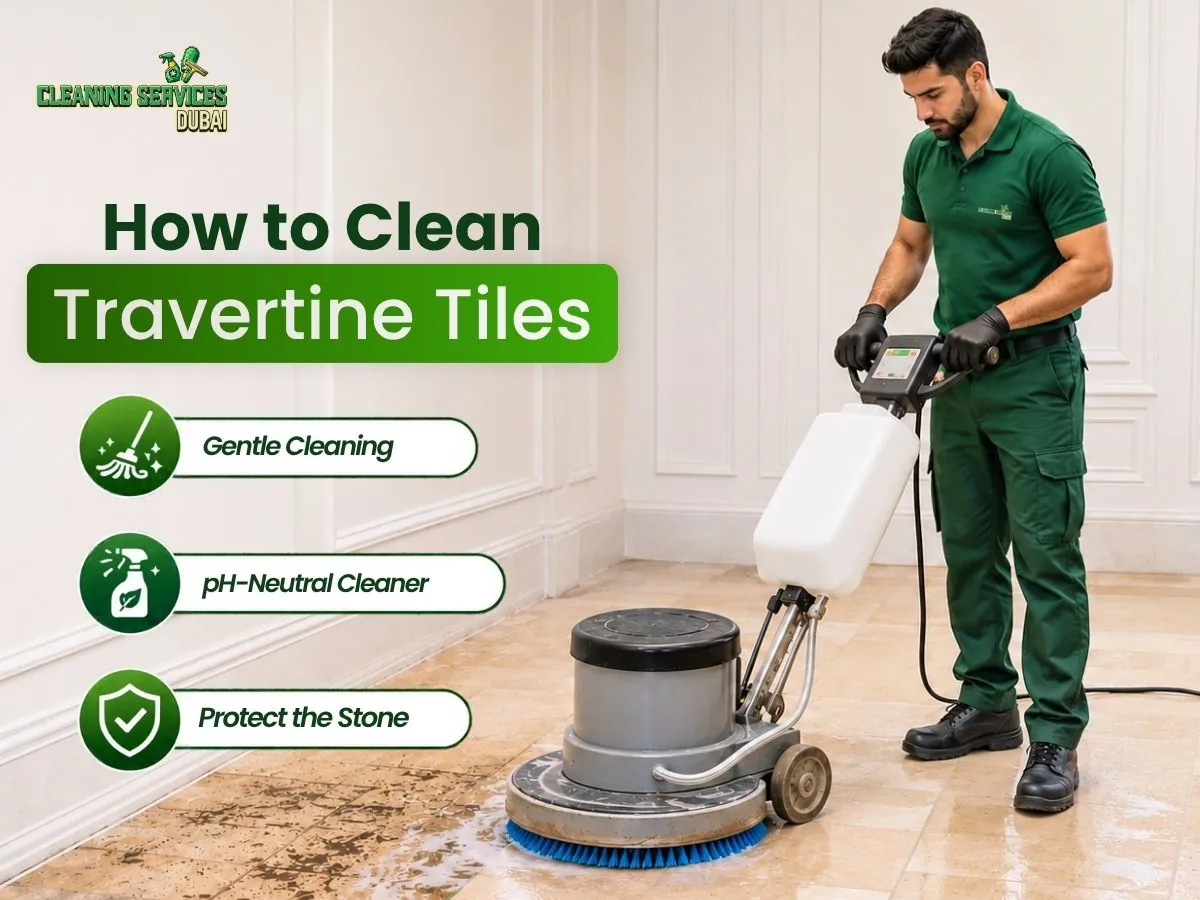
How to clean travertine tiles properly comes down to gentle, regular care. Start by removing loose sand and dust, then use a pH-neutral stone cleaner with a damp microfiber mop. Rinse away residue and dry the surface. Never clean travertine with vinegar, lemon juice or abrasive pads.
Most travertine guides say “use a pH-neutral cleaner” and stop there. That is the easy part. In Dubai homes, the damage usually comes from what happens next: shamal sand ground into the floor, hard water left to dry on the stone, an acidic bathroom spray used once too often, or a sealer that wore off months ago without anyone noticing.
- Sweep or vacuum sand and grit before any water touches the stone.
- Clean with a pH-neutral stone cleaner and a damp, not wet, microfiber mop.
- Never use vinegar, lemon, acidic bathroom sprays or scouring pads.
- Blot spills fast; oil and deep stains need a poultice, usually left for 24–48 hours.
- Do the water drop test, and reseal indoor floors about every 1–3 years.
Travertine is porous and made of calcium carbonate, so products that are fine on ordinary floor tiles can dull or mark it. In this guide from Cleaning Services Dubai, you’ll learn the safe cleaning method, what to avoid, how to treat stains, how to care for showers and pool decks, and when to seal.
What Is Travertine and Why Does It Need Special Cleaning?
Travertine is a natural stone used for floors, bathrooms, walls, patios and pool areas. It forms around mineral-rich springs and contains natural pits, holes and pores. It looks similar to marble, which is why people in Dubai often call it travertine marble.
What Is Travertine Stone Made Of?
Travertine stone is a calcium-based natural stone made mainly of calcium carbonate. This composition gives it its familiar cream, beige, ivory and silver shades, but it also makes the surface sensitive to acids. That one fact shapes every cleaning choice in this guide.
Why Are Travertine Tiles Porous?
Unlike most manufactured tiles, travertine tiles have natural pores that collect dust, moisture, soap residue and dirt. In Dubai homes, fine sand blown in during shamal season settles into the stone and grout lines. Regular dry dust mopping removes this grit before foot traffic rubs it across the floor like sandpaper.
What Are the Different Travertine Finishes?
The stone finish changes how the floor looks and how much dirt it holds.
- Polished: smooth and reflective, but scratches and etch marks stand out.
- Honed: matte or satin, with less reflection.
- Tumbled: textured and aged, with softer edges.
- Brushed: lightly textured by brushing.
- Filled: natural holes are filled for a more even surface.
- Unfilled: open pores stay visible and collect more dirt.
Always identify the finish before choosing a brush, cleaner or stain treatment.
What Is the Best Way to Clean Travertine Tiles?
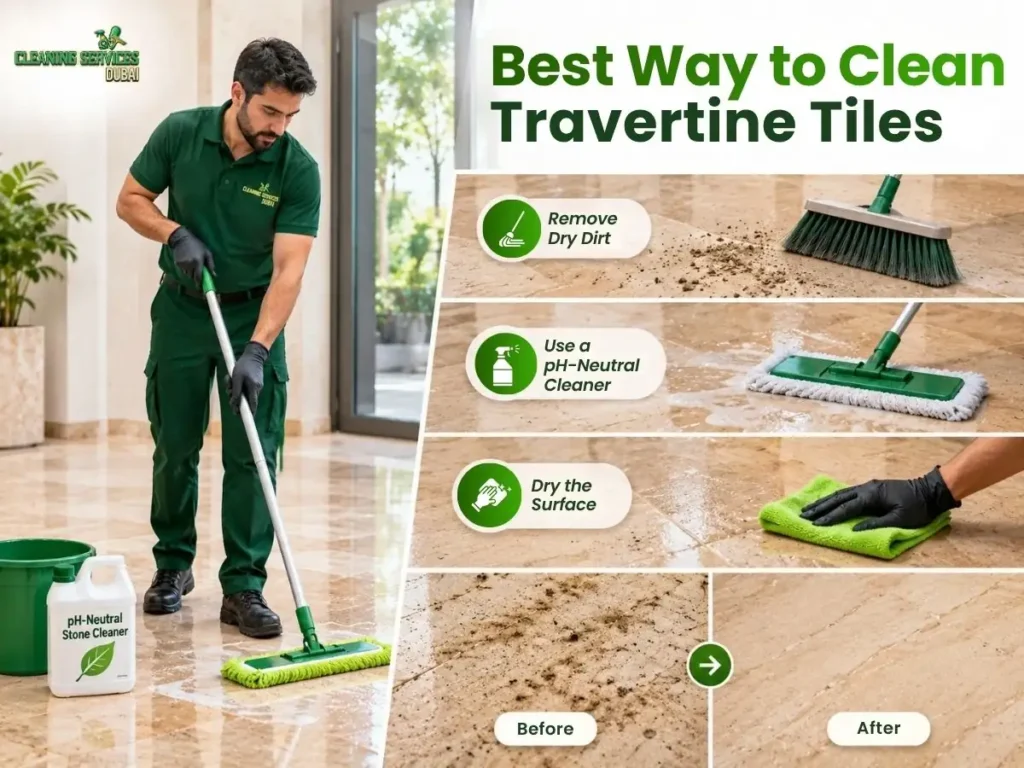
The safest routine is simple: remove dry dirt, use a diluted pH-neutral cleaner, mop gently and dry. A strong chemical is not a shortcut; it can damage the stone or leave a film that attracts more dirt.
Which Cleaner Is Safe for Travertine?
Choose a pH-neutral cleaner labelled for natural stone. Neutral means it is neither acidic nor strongly alkaline, so it lifts dirt without attacking the calcium in the stone. Use the amount stated on the label, because extra product leaves a cloudy film.
| Cleaning option | Recommended use |
|---|---|
| pH-neutral stone cleaner | Routine floor cleaning |
| Warm water | Light dust and surface dirt |
| Stone-safe stain remover | Only for the stain and stone type stated on the label |
Which Tools Should You Use?
Use equipment that will not scratch the stone or push grit across it.
- Microfiber mop for damp mopping.
- Soft-bristle broom for loose dirt.
- Vacuum with a soft floor attachment and the beater bar switched off.
- Soft nylon brush for textured areas and grout joints.
- Clean microfiber cloth for drying.
How Do You Clean Travertine Floors and Tiles Step by Step?
Here is how to clean travertine floors and tiles in five steps. A good routine removes loose debris before any water touches the stone.
- Remove sand and loose dirt. Sweep or vacuum, including entrances, corners and under furniture. Door mats cut the grit brought inside.
- Prepare the cleaning solution. Dilute a pH-neutral stone cleaner as the label says. Do not make it stronger for stubborn dirt.
- Damp mop the surface. Use a microfiber mop that is damp, not dripping. Work in small sections and never leave water standing.
- Rinse away residue. If the cleaner needs rinsing, use clean water and change it when it turns dirty. Leftover soap creates a cloudy film.
- Dry the tiles. Wipe with a microfiber cloth or dry mop to prevent water spots, which show most on polished finishes.
What Should You Avoid When Cleaning Travertine Tiles?
Part of knowing how to clean travertine tiles is knowing what not to use. The wrong product can damage the stone even when it is sold as a natural or multipurpose cleaner.
| Avoid | Why it is a problem |
|---|---|
| Vinegar, lemon juice and muriatic acid | Acids etch calcium-based stone |
| Acidic bathroom cleaners and descalers | Dull or damage the stone finish |
| Abrasive powders and scouring pads | Scratch the surface |
| Strong or frequent bleach and ammonia | Overuse can dull the stone and weaken the sealer; never mix them |
| Acidic grout cleaners | Etch the stone next to the grout line |
| Steam mops | Heat and moisture can weaken the sealer and grout |
| Wax or shine coatings not made for stone | Leave a film that can turn yellow and trap moisture |
| Too much detergent | Leaves residue and streaks |
Can You Use Vinegar on Travertine?
No. Calcium carbonate reacts with acid. That reaction removes the smooth finish and leaves a dull patch. This is etching, not dirt, and mopping will not remove it. As the Natural Stone Institute puts it, “Calcium Carbonate is sensitive to acidic solutions so mild, non-acidic cleaners are recommended.”
Remember: Never mix bleach and ammonia. The combination releases toxic gas.
How Do You Remove Stains from Travertine Tiles?
First identify what caused the mark. An oil stain, a white mineral deposit and an acid etch each need a different fix, and the wrong chemical makes the damage worse.
| Stain or mark | What to do |
|---|---|
| Hard water marks (common with Dubai tap water) | Wipe with a stone-safe cleaner, rinse and dry. Never use an acid descaler. Heavy deposits need professional treatment. |
| Oil and grease | Blot fresh spills. Use a stone-compatible oil stain remover or poultice as directed. |
| Coffee, tea or wine | Blot immediately and use a stone-safe stain treatment for organic stains. |
| Rust or orange marks | Avoid household rust removers, which are acidic. Use a rust treatment made for natural stone. |
| Black spots in pits or mould | Fix the moisture source, then use a product approved for the stone and grout. |
| Yellowing | Usually old wax, a topical sealer or iron in the stone. Old coatings normally need professional stripping. |
| Soap residue | Use a non-acidic product labelled for natural stone and rinse thoroughly. |
When Should You Use a Travertine Poultice?
A travertine poultice is an absorbent paste that draws stains out of porous stone. It works best on oil-based and deep organic stains. Most poultices stay in place for 24–48 hours under plastic; follow the product label and test first on dark, polished or unfilled travertine. If the cause is unknown, a professional assessment is safer.
What Is the Difference Between a Stain and an Etch Mark?
A stain is something absorbed into the stone, such as oil, coffee or rust. An etch mark is damage to the surface finish, usually from an acidic spill. Cleaning can remove a stain, but etching needs professional honing or refinishing.
How Do You Clean Travertine Shower Tiles and Grout?
In Dubai’s humid summers, shower floors and walls face daily moisture, soap residue and mineral deposits, which collect in grout lines and pores. Use a stone-safe cleaner with a soft cloth or brush.
Good tile and grout cleaning means no acidic grout cleaners unless the label confirms they are safe for travertine. Clean small sections, rinse well, and check grout and silicone lines for gaps that let water in.
How to Prevent Soap Scum and Mould in Shower Areas
Squeegee the stone after each shower, keep the bathroom ventilated and fix leaks quickly. If mould keeps returning, wiping the visible area will not solve the moisture problem.
How Do You Clean Outdoor Travertine Tiles and Pavers in Dubai?
Outdoor travertine pavers in Dubai deal with conditions indoor floors never see:
- Shamal sand and dust settling in pores and joints.
- Chlorine or salt pool water that the sun dries into marks.
- Algae in shaded, damp corners.
- Mineral deposits from sprinklers.
Sweep often, rinse pool splash with fresh water and use a pH-neutral stone cleaner labelled for outdoor travertine. For algae, a mild bleach solution followed by a thorough rinse is the usual fix.
Is Pressure Washing Safe for Travertine Pavers?
Only at low pressure. High pressure can blast out grout and filler. Use a wide fan nozzle, keep a safe distance and rinse rather than blast. For loose joints or damaged pavers, arrange a professional inspection.
How Do You Seal and Protect Travertine Tiles?
A stone sealer slows how quickly liquids enter porous travertine. A general tile sealer or marble sealer is only right if its label lists travertine. Sealing makes the stone stain-resistant, not stain-proof, and it does not stop acid etching.
What Is the Difference Between a Penetrating and Topical Sealer?
A penetrating (impregnating) sealer soaks into the stone and lets it breathe. A topical sealer forms a coating that can peel or turn yellow. For most travertine, especially showers and outdoor areas, penetrating is the usual choice.
How to Tell If Travertine Needs Resealing
The water drop test is a quick check you can do yourself:
- Choose a clean, dry, hidden area.
- Place a few drops of water on the surface.
- Watch for 5–10 minutes.
- If the stone darkens, it is absorbing water and is likely due for resealing. If the water beads on top, the sealer is still working.
Coatings, stone colour and finish can affect the result, so the sealer label is the final rule. Before sealing, clean the stone and let it dry completely.
How Often Should You Reseal Travertine?
Indoor floors often need resealing every 1–3 years. Showers, kitchens and pool decks usually need it sooner.
If a sealer fails within a few months, the cause is usually one of these:
- The wrong sealer type, such as a topical coating outdoors.
- Harsh cleaners that strip the sealer.
- Not enough cure time before the floor was walked on or washed.
How Often Should You Clean Travertine Tiles?
Adjust this schedule to the foot traffic and location of the stone.
| Frequency | Cleaning task |
|---|---|
| Daily or as needed | Remove sand, dust and spills |
| Weekly | Damp mop with a pH-neutral cleaner |
| Monthly | Check grout joints, corners and areas around furniture for dirt and etch marks |
| Every few months | Deep clean grout lines and outdoor areas |
DIY vs Professional Travertine Cleaning: Which Is Better?
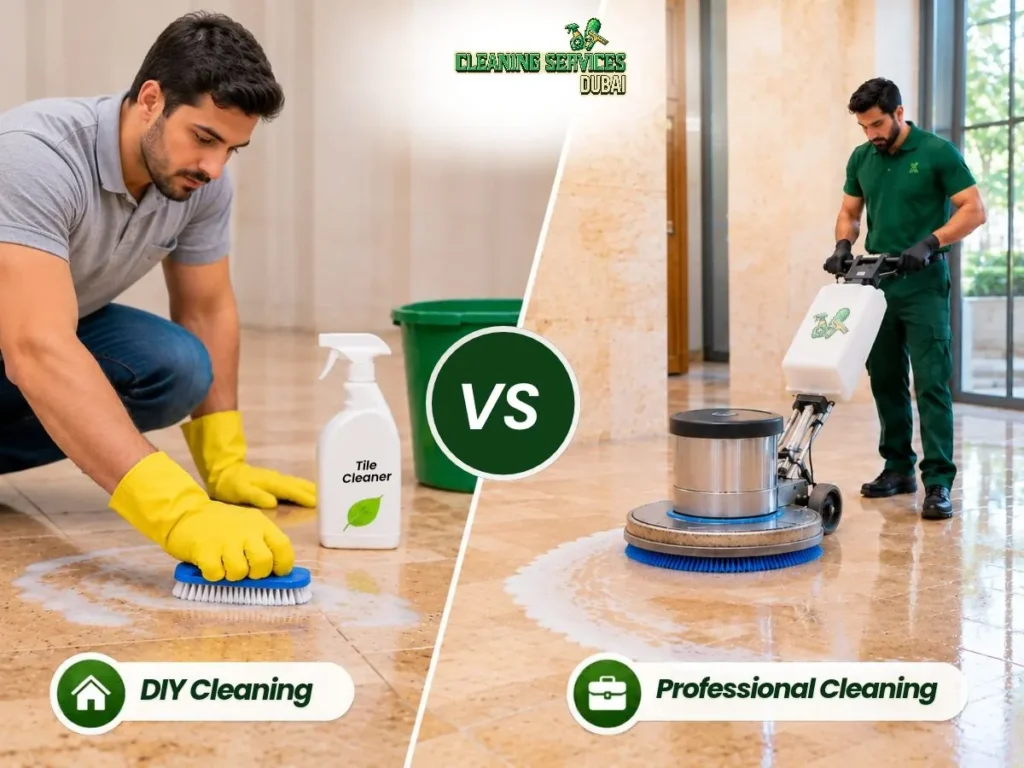
DIY cleaning works well for loose dirt, light spills and routine care. It becomes risky with deep stains, heavy mineral deposits, damaged grout, visible etching, or cracks and chips. If a travertine floor still looks dull after several products, the finish itself is usually damaged. Each professional service fixes a different problem:
| Service | What it fixes |
|---|---|
| Deep cleaning | Ground-in dirt and grout discolouration |
| Honing | Etch marks, light scratches and dull patches |
| Polishing | Lost shine on polished travertine |
| Sealing | Fast absorption and repeat staining |
Before hiring a marble polishing company in Dubai for travertine, ask them to check the finish first, because travertine is more porous than most marble. In homes with mixed flooring, each surface should be treated separately, because a method that suits porcelain may not suit travertine.
Why Choose Cleaning Services Dubai for Travertine Care?
Travertine needs more than a quick mop and a strong chemical. Our floor cleaning services in Dubai start with an assessment of the floor condition and visible staining.
Our Stone-Safe Cleaning Promise
We match the method to the stone and its finish, and agree the scope before work begins. No surface is treated with an unsuitable product just to finish faster.
Who Benefits Most?
Villa owners with travertine pool decks, apartment owners, landlords preparing a handover, and offices or lobbies with travertine floors.
FAQs – How to Clean Travertine Tiles
How do you clean travertine tiles naturally?
Mix warm water with a few drops of mild liquid dish soap, damp mop, then rinse with clean water so no soap film is left. Skip vinegar and lemon, even though many natural cleaning recipes use them. See our guide on how to clean floors naturally for more safe options.
Does baking soda clean travertine?
Baking soda is mildly alkaline, so it does not etch like vinegar. As a paste, though, it can scratch polished travertine. Use it only as a gentle poultice base on honed, tumbled or sealed stone, and test a hidden area first.
Can you use hydrogen peroxide on travertine?
Hydrogen peroxide is used in some poultices for organic stains such as coffee or wine on light-coloured travertine. It can lighten darker stones, so test it first or ask a stone-care professional.
What happens if you don’t seal travertine?
Unsealed travertine absorbs spills faster, so oil, coffee and dirty mop water can darken the stone and settle in the grout. Outdoor and shower areas show this first.
How do you make polished travertine shiny again?
First check what is causing the dullness: residue, mineral deposits, scratches or acid etching. A stone-safe cleaner removes surface film, but damaged polish needs professional honing and polishing. Wax and shine sprays are not a lasting repair.
How do you clean silver travertine in a bathroom?
Silver and light travertine show stains and grout discolouration faster than darker stone. Wipe spills from hair dye, cosmetics and soap quickly, and test peroxide or bleach-based products on a hidden spot first, as they can change its colour.
Is cleaning travertine different from cleaning marble?
Both are calcium-based stones that acids can damage, which is why travertine marble is a common name in Dubai. Travertine is more porous and has natural holes, so it holds dirt and absorbs spills faster. A marble cleaner is only right if its label lists travertine.
Last updated: November 2026.
Results depend on the stone type, finish, grout and sealer. Always follow product labels and manufacturer instructions.
